

Not everything you spend money on is worth it. But some intentional purchases quietly improve your daily life in ways that compound over time, and those are worth choosing carefully.
As an Amazon Associate, Fox & Nook earns from qualifying purchases. This article about intentional purchases contains affiliate links. If you choose to purchase through them, Fox & Nook earns a commission at no additional cost to you. We only reference products or services we believe align with intentional, functional living. Learn more about our Affiliate Policy.
Introduction to Intentional Purchases

Intentional spending is often discussed in terms of what not to buy, the subscriptions to cancel, the impulse purchases to avoid, and the habits that quietly drain a budget without adding much in return.
That conversation is worth having, and we’ve had it elsewhere on Fox & Nook.
But intentional spending has an equally important other side, and that is to recognise that some purchases are genuinely worth it. Not as treats or rewards, and not because they’re expensive, but because they add consistent, lasting value to ordinary daily life. Because they reduce friction, improve comfort, or support the kind of everyday experience you’re actually trying to create.
The eight intentional purchases in this guide share a few key qualities. They’re used regularly, not occasionally. Their value compounds over time rather than fading after the novelty wears off. And in each case, the quality of the item makes a meaningful difference to the quality of the experience, which is the whole point of choosing carefully rather than spending automatically.
This isn’t a shopping list. It’s a framework for recognising the difference between spending that adds something real and spending that simply feels like it should.
Quick Overview
The 8 intentional purchases covered:
- A quality mattress topper or pillow
- Warm, layered lighting for your home
- A reliable water bottle or travel thermos
- Comfortable, supportive everyday footwear
- Simple home organisation tools
- A coffee or tea setup you genuinely enjoy
- Focus-friendly items for your environment
- Something that encourages offline time
Plus: what makes a purchase genuinely worth it and FAQs.
What Makes a Purchase "Worth It"?
Before getting into specific recommendations, it’s worth naming the criteria because, without them, any list of “things to buy” is just more noise.
A purchase is genuinely worth it when it consistently earns its place in your daily life. That sounds simple, but it rules out a surprisingly large proportion of what most people spend money on.

Here are the four questions worth asking before any significant purchase:
How often will I actually use this? Frequency of use is the most reliable proxy for value. Something used every single day at a modest price delivers more cumulative value than something expensive used twice a year. Consequently, everyday items, such as bedding, footwear, lighting, and the mug you reach for every morning, are frequently where the best return on intentional spending is found.
Does quality make a meaningful difference here? For some categories, the difference between a cheap version and a well-made version is negligible in practice. For others, it’s the entire point. A well-made pillow that supports your sleep properly is a different product from an inexpensive one that doesn’t just in price, but in what it actually delivers. Identifying which category a purchase falls into before buying is the core skill of intentional spending.
Will this reduce friction or add to it? The best purchases tend to be the ones you stop thinking about; they simply work, every time, without requiring adjustment or workaround. Conversely, a cheaper alternative that breaks, underperforms, or needs replacing frequently adds friction rather than removing it. Over time, that friction has both a financial and a mental cost.
Am I buying this, or the idea of this? Some purchases are genuinely useful. Others are appealing because of the version of life they seem to represent: the organised home, the productive morning, the healthier habit. The item itself rarely delivers the transformation. The habit or environment it supports might, but only if those were already in place. Buying something as a proxy for a change you haven’t yet made is one of the most common and least effective forms of spending.
With those questions established, here are eight categories where the answer to all four is consistently yes.
1. The most important Intentional Purchase: A Quality Mattress Topper or Pillow
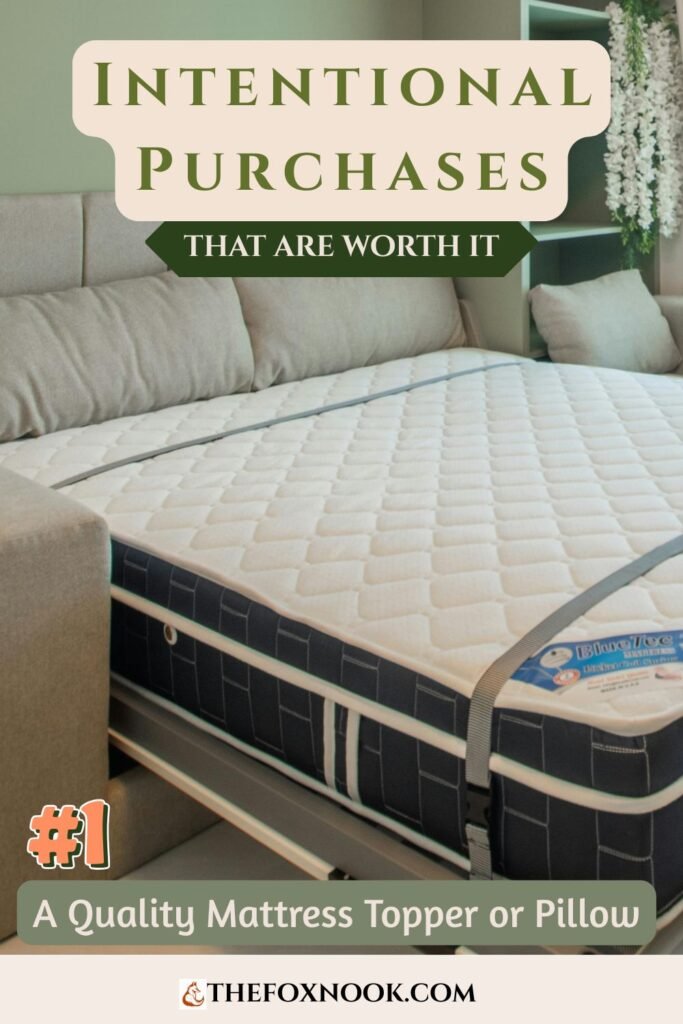
Sleep is the foundation of almost everything else.
Focus, mood, patience, energy, and physical recovery are all directly shaped by the quality of sleep you get, which is, in turn, significantly influenced by the physical conditions in which you sleep. Yet bedding is one of the most consistently underinvested categories in most households.
A full mattress replacement is a significant expense that isn’t always necessary or accessible.
A quality mattress topper, however, can meaningfully improve the comfort of a mattress that works but isn’t ideal at a fraction of the cost.
Similarly, the pillow you sleep on affects spinal alignment and sleep quality in ways that are easy to underestimate until you experience a genuinely good one.
What to look for when it comes to your pillows and mattress toppers
The right choice depends on how you sleep. Side sleepers generally benefit from a firmer, higher-loft pillow that keeps the neck aligned with the spine. Back sleepers typically need something medium-firm. If you frequently wake with neck or shoulder tension, your current pillow is a reasonable first thing to examine.
For mattress toppers, memory foam provides pressure relief and is well-suited to those who find their mattress too firm. Natural materials like wool or latex tend to regulate temperature better, which is worth considering if you sleep warm.
Why it’s worth it: You spend roughly a third of your life in bed. The return on improving the quality of that time in energy, clarity, and daily function compounds every single day.
Our recommendations:
A quality, versatile pillow option:
→ Luxury Adjustable Pillows King Size for Side Sleepers, Dual Layer Adjust Height Soft Firm Cooling Bed Pillow for Back, Stomach or Side Sleepers
See current price on Amazon
A reliable and affordable mattress topper:
→ BEDELITE 3 Inch Egg Crate Memory Foam Mattress Topper
See current price on Amazon
As an Amazon Associate, Fox & Nook earns from qualifying purchases.
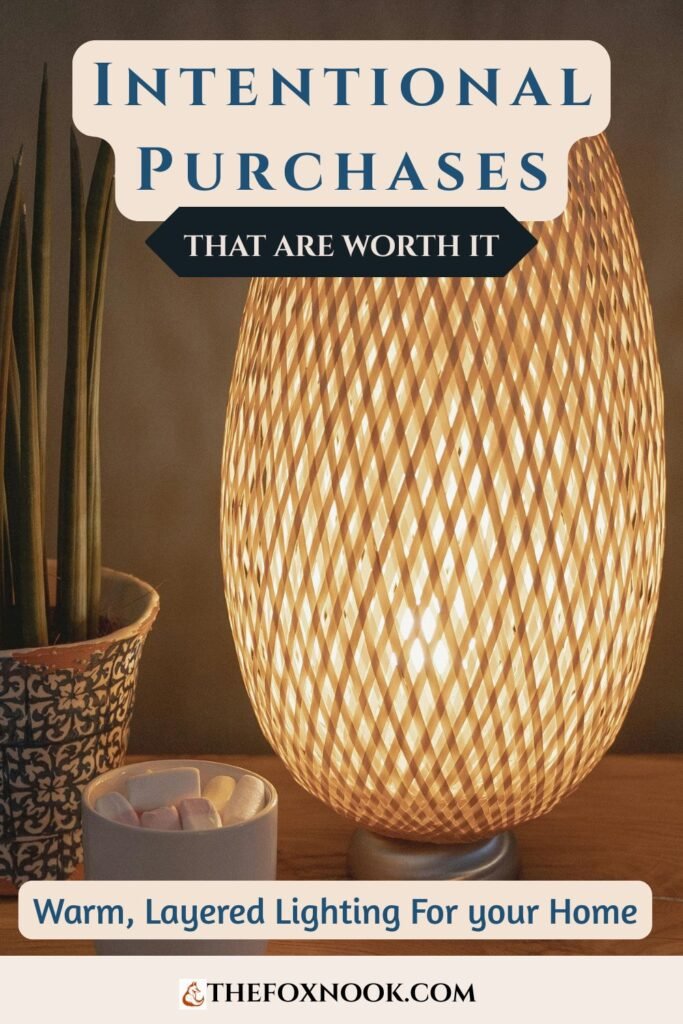
2. Intentional Purchases for Warm, Layered Lighting for Your Home
Lighting is one of the most impactful and most consistently overlooked elements of how a home feels to live in day to day. As explored in our slow living home swaps post, the shift from harsh overhead lighting to warm, layered light is one of the fastest and most affordable ways to change the quality of your home environment.
The reason it belongs on a list of intentional purchases is simple: a good lamp, placed well, is used every single evening. Its effect on mood, on the ease of winding down, and on the quality of the time spent at home accumulates across thousands of hours of daily life.
What to look for
A floor or table lamp with a warm bulb (2700K to 3000K) placed in the corner of a room you spend evenings in is the single highest-return lighting purchase for most households. Adjustable brightness is worth having the ability to dim a lamp as the evening progresses, which supports the body’s natural wind-down process considerably. Cordless lamps have improved significantly in quality and now offer genuine flexibility in placement without cable management concerns.
Why it’s worth it: unlike most purchases, good lighting doesn’t depreciate.
A well-made lamp used every evening for ten years represents an exceptionally low cost per use, and the improvement to daily experience begins the first evening you use it.
Our recommendations:
→ Rattan Table Lamp, Boho Bamboo Woven Small Side Lamp, Vintage Wicker Wooden Nightstand Lights
Check current price on Amazon
As an Amazon Associate, Fox & Nook earns from qualifying purchases.
Intentional Purchases for Hydration: A Reliable Water Bottle or Travel Thermos

This is one of the most modest purchases on this Intentional Purchases list in terms of cost and one of the clearest examples of a small, daily-use item delivering consistent value over time.
A well-made insulated water bottle keeps cold water cold and hot drinks hot for hours, holds up to daily use without deteriorating, and removes the friction of repeatedly reaching for plastic bottles or making extra trips to the kitchen. Used every day, it earns its cost within a matter of weeks and continues earning it for years afterward.
What to look for
Insulation quality is the primary consideration. Double-walled stainless steel construction maintains temperature reliably and doesn’t affect the taste of the contents. A wide-mouth opening makes it easy to clean and to add ice. Weight matters if you carry it regularly. Some insulated bottles are heavier than they need to be.
For a travel thermos specifically, the lid design makes a significant practical difference: a leakproof lid with a one-handed opening mechanism is worth prioritising if you use it while commuting or at a desk.
Why it’s worth it: a reliable water bottle is used multiple times daily, reduces spending on bought drinks, and supports the simple habit of staying hydrated, which has an outsized effect on energy and focus relative to how unglamorous the habit sounds.
Our top recommendations for water bottles and travel thermoses:
A quality, reliable water bottle →
YETI Rambler 26 oz Bottle, Vacuum Insulated, Stainless Steel with Chug Cap, Black
See current price on Amazon
As an Amazon Associate, Fox & Nook earns from qualifying purchases.
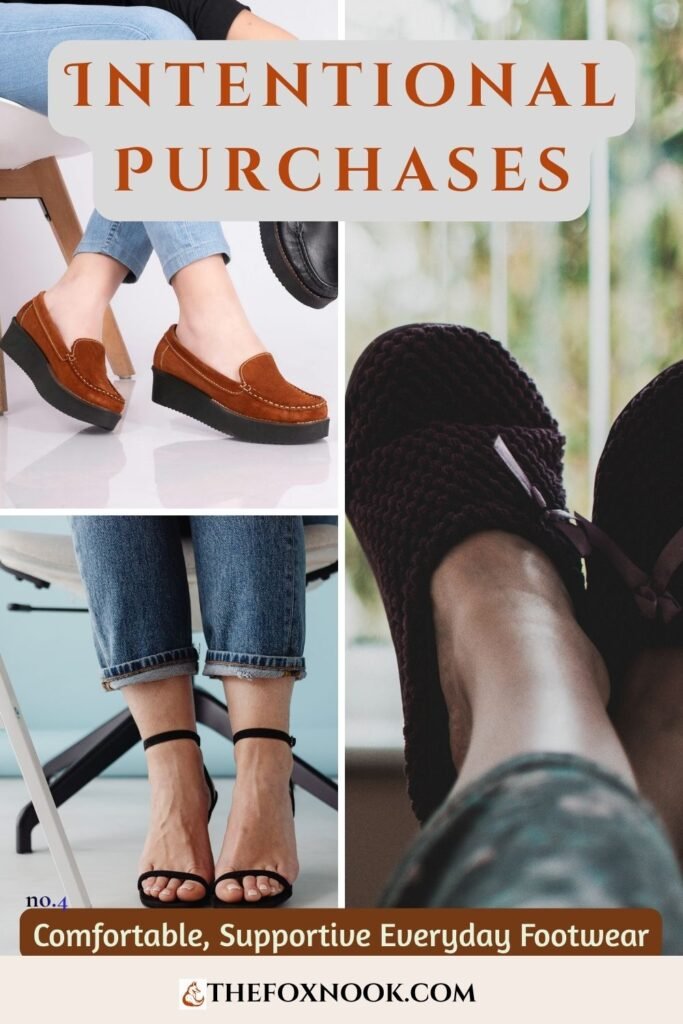
4. Intentional Purchase no.4: Comfortable, Supportive Everyday Footwear
The connection between physical comfort and daily energy is consistently underestimated.
Specifically, the footwear worn for most of the day shapes posture, affects fatigue levels, and influences how the body feels by the evening in ways that accumulate quietly across every day of the week.
Most people own shoes they like the look of. Fewer people own shoes that genuinely support the foot properly, and the difference, experienced over a full day of standing, walking, and moving, is noticeable. Similarly, indoor footwear is a category that many households overlook entirely, defaulting to socks or inexpensive slippers, despite the fact that it affects comfort for the majority of the time spent at home.
What to look for
For outdoor everyday footwear, arch support and a sole with adequate cushioning are the practical priorities, not as a medical prescription, but as the basics of a shoe that doesn’t add physical fatigue to an already-demanding day. A well-made pair that fits properly and will last several years is a better investment than multiple cheaper pairs replaced frequently.
For indoor footwear, the sole structure matters more than most people expect. A slipper with a flat, unsupportive sole offers warmth but not much else. One with a contoured insole and a non-slip outsole offers warmth and genuine physical support and makes the difference between a home that feels restorative and one that is merely comfortable.
Why it’s worth it: your feet are the foundation of your physical experience of every day. Footwear is used more hours per day than almost any other product you own.
5. Intentional Purchases for Simple Home Organisation Tools
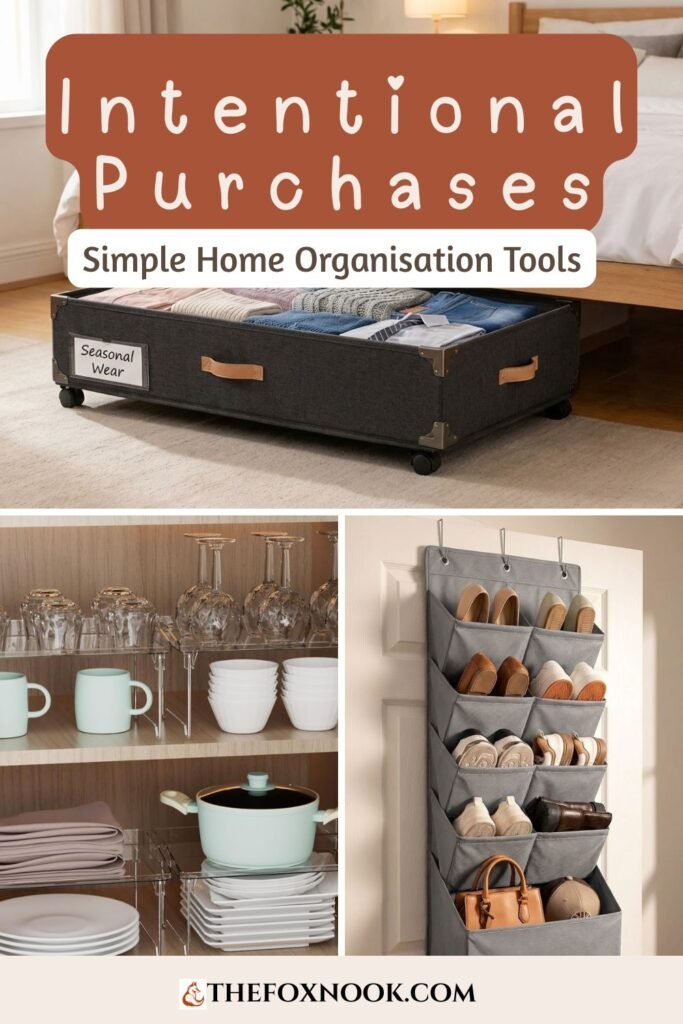
As explored in our slow living home swaps guide and the desk setup post, visual and physical clutter creates a low-level cognitive load that persists for as long as you’re in the space.
Organisation tools specifically, simple, well-chosen ones, address this not by creating a Pinterest-perfect interior but by giving the objects you already own a logical, consistent home.
The result is a reduction in the small daily frictions: the drawer that takes three attempts to find what you’re looking for, the surface that accumulates whatever is placed on it, the cupboard that requires everything to be removed to find the item at the back. Individually negligible; collectively a real and unnecessary drain on time and attention.
What to look for
The most useful organisation purchases are typically the least glamorous: drawer dividers that separate the contents of a junk drawer into categories, shelf inserts that make a deep cupboard navigable, and a simple basket that gives homeless items a designated landing spot. Natural materials, such as bamboo, wicker, and linen-lined boxes, tend to be both durable and visually calm, which matters in spaces you look at daily.
The key principle: buy organisation tools for the spaces that cause daily friction, not for the spaces that already work. The goal is to solve real problems, not to organise things that don’t need it.
Why it’s worth it: the time and attention saved by a well-organised space, accumulated across every morning routine, every cooking session, and every search for something misplaced, represents a meaningful return on a relatively small purchase.
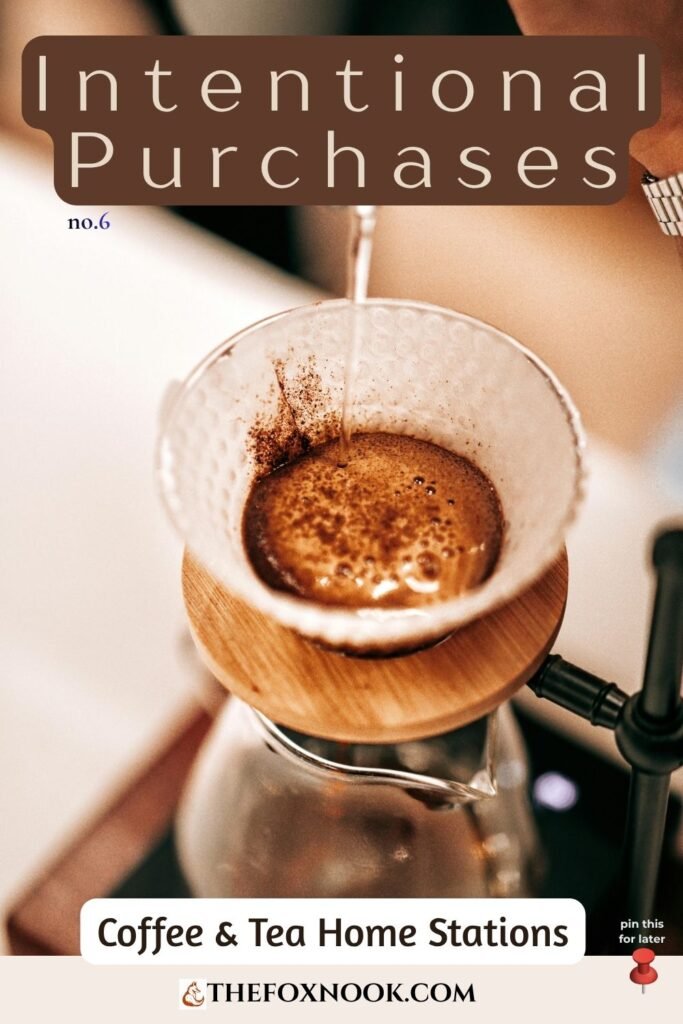
6. Intentional Purchases for A Coffee or Tea Setup You Genuinely Enjoy
Small daily rituals carry more weight in the quality of everyday life than their size suggests. The way a morning begins, specifically whether it feels rushed and reactive or calm and considered, shapes the tone of the hours that follow in ways that are subtle but real.
A coffee or tea setup you genuinely enjoy is, in practice, an investment in the quality of that daily ritual. Not an expensive espresso machine or a complex brewing system, but a method you find satisfying, a mug that feels good to hold, and the simple pleasure of making something properly rather than grabbing something convenient.
What to look for
The right setup depends entirely on personal preference, which is part of the point. This is a purchase that should reflect what you actually enjoy, not what looks impressive. A stovetop moka pot produces a strong, rich espresso-style coffee with no electricity and no complexity. A French press offers full control over strength and is simple to use and clean. An electric kettle with temperature control is a meaningful upgrade for loose-leaf tea, where water temperature affects flavour noticeably.
A quality mug- ceramic, well-weighted, with a size and shape that genuinely suits how you drink- is a small detail that improves the experience of every cup. It costs very little and is used multiple times daily for years.
Why it’s worth it: a coffee or tea setup used twice a day, every day, for several years has an exceptionally low cost per use. More significantly, it transforms a daily habit from a transaction into a small, reliable moment of pleasure, which is exactly what intentional purchases are for.
Our recommendations for coffee and tea lovers:
Pour-over style coffee maker →
Chemex Pour-Over Glass Coffeemaker – Classic Series – 8-Cup – Exclusive Packaging
See current price on Amazon
French press-style coffee maker →
Secura French Press Coffee Maker, 304 Grade Stainless Steel Insulated Coffee Press
See current price on Amazon
A 3-tier morning station organizer →
3-Tier Tea Bag Organizer with Drawer for Countertop
See current price on Amazon
A stylish compact morning station organizer →
Bokelai Coffee Station Organizer for Countertop Bar Accessories
See current price on Amazon
An overall useful coffee/tea glass canister with lid →
Glass Coffee Canister with Wooden Lid & Spoon, Airtight Food Storage Jar Ground Coffee Bean Storage Containers for Coffee, Sugar, Salt, Tea & Snacks
See current price on Amazon
As an Amazon Associate, Fox & Nook earns from qualifying purchases.
7. Intentional Purchases for: Focus-Friendly Items for Your Environment
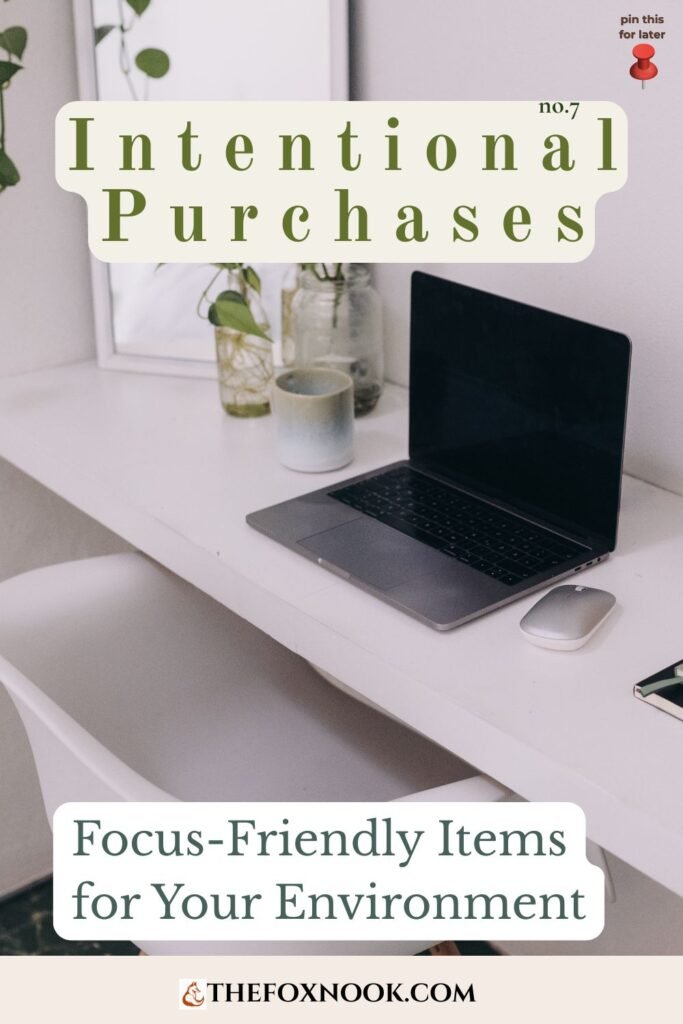
The environment in which you work, think, or focus directly affects the quality of the output. This is the core argument of the desk setup for deep work post, and it extends beyond the physical desk to any space where sustained attention is required.
Noise is one of the most significant and most manageable environmental factors. Background sound, neighbours, traffic, and household noise create a persistent low-level distraction that depletes concentration gradually, often without the conscious awareness that it’s happening.
Additionally, the physical comfort of the environment, as discussed in the desk setup guide, shapes how long focused work can be sustained before fatigue sets in.
What to look for
Over-ear headphones with passive noise isolation (or active noise cancellation for higher-budget options) are the most impactful single purchase for anyone who works or studies in a shared or noisy environment. The difference between trying to concentrate through ambient noise and working within a quieter acoustic environment is immediate and significant.
Our top picks:
→ JBL Tune 520BT Bluetooth Headphones Wireless Over-Ear
Check current price on Amazon
→ AOC Professional Over-Ear Studio Headphones, DJ & Monitor Headphones
Check current price on Amazon
A white noise machine or app is a lower-cost alternative that masks background sound with consistent, non-distracting audio. Many people find it more comfortable for extended periods than music, which can become its own distraction.
A simple physical desk accessory, a quality pen and notebook kept within reach, a cable management solution that removes visual clutter, a small plant as discussed in the slow living post, address the visual friction that accumulates around a working space and, without drama, make it easier to sit down and begin.
Our top picks for physical desk accessories:
→ A5 Lined Notebook with Pen & Gift Box 216 Pages PU Leather Journal
Check current price on Amazon
Why it’s worth it: the return on reducing environmental friction around focused work is measured in the quality and quantity of what gets done and in the reduced mental fatigue of getting there.
As an Amazon Associate, Fox & Nook earns from qualifying purchases.
8. Intentional Purchases That Encourage Offline Time
The final purchase on this list is deliberately open-ended because what belongs here is different for every person, and the principle matters more than any specific product.
Most of us spend a significant proportion of our leisure time in front of a screen by default. Not always by genuine preference, but because screens are immediately available, immediately stimulating, and require no activation energy to begin.
The result is a pattern where genuinely restorative, engaging offline activities, such as reading, making things, puzzles, drawing, playing an instrument, any form of creative or absorbing hands-on activity, get crowded out not because we don’t value them, but because we never quite get around to them.
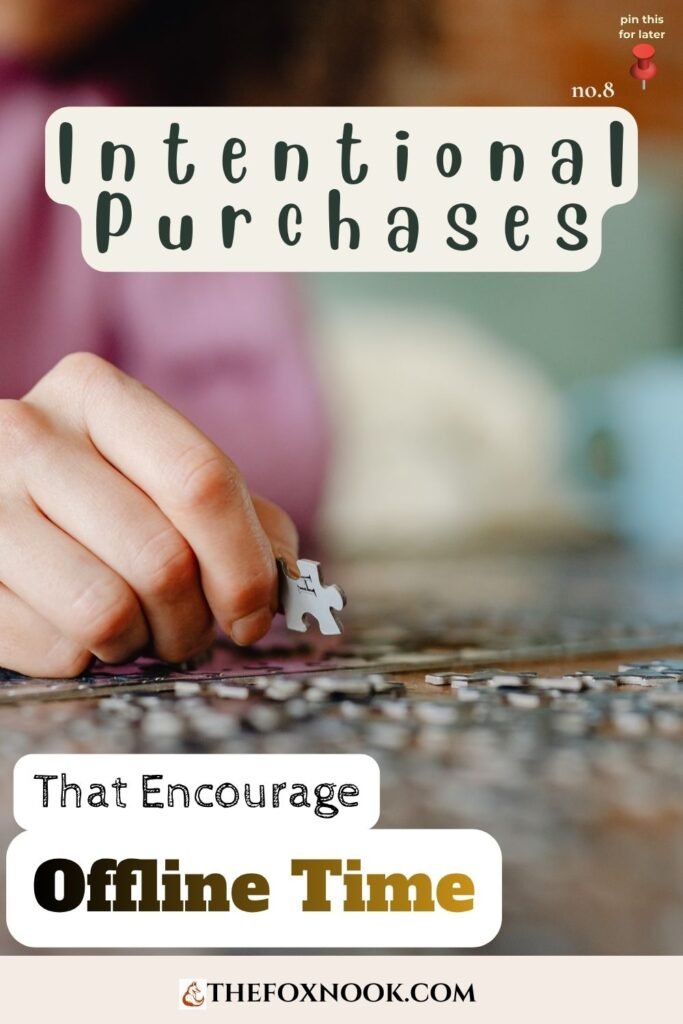
An intentional purchase in this category is one that lowers the activation energy for the offline activity you actually want to do more of.
A book you’ve been meaning to read, bought rather than perpetually planned.
A quality journal that makes writing by hand feel like a pleasure rather than a chore.
A puzzle, a craft kit, a set of watercolours, or whatever the equivalent is for your particular version of offline engagement.
What to look for
The right purchase here is the one that addresses your specific point of resistance.
If you want to read more, the barrier is rarely the absence of books; it’s usually the absence of a comfortable, inviting place to read, or the habit of reaching for a phone in the same moments you might otherwise read. A good book combined with a deliberate reading corner (even a single comfortable chair and a lamp) lowers both barriers simultaneously.
If the goal is a creative or making practice, the same principle applies: a modest, well-chosen starter set for whatever the activity is one that makes beginning easy rather than requiring elaborate preparation, is far more useful than a comprehensive kit that sits unused because it feels like a commitment.
Why it’s worth it: the quality of offline time spent in absorbed, focused, genuinely restorative activity is one of the strongest predictors of subjective well-being. An intentional purchase that makes more of that time available is, by definition, worth it.
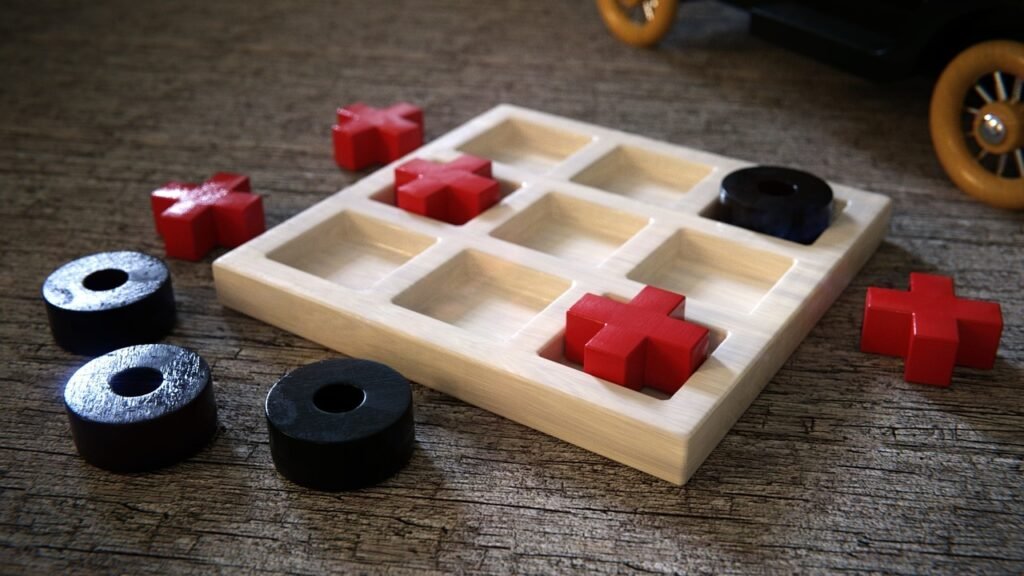
Some of our top recommendations to encourage quality offline time:
- Hasbro Gaming Trouble: Famous for its iconic Pop-O-Matic die roller, this simple race-and-chase game remains an addictive family favorite.
→ Check current price on Amazon - Mattel Games UNO Card Game: Fast-paced, easy to learn, and perfect for all generations, this card game is the ultimate staple for quick offline entertainment. → Check current price on Amazon
- Hasbro Gaming Trivial Pursuit Game, Classic Edition Multicoloured C1940: The definitive showdown for trivia lovers, challenging players to test their knowledge across six timeless categories. → Check current price on Amazon
- Hasbro Gaming Guess Who? The Original Guessing Game: A classic two-player deduction game that challenges you to ask the right questions and narrow down the mystery face.
→ Check current price on Amazon - Operation Electronic Board Game: Test your steady hands and focus with this nerve-wracking, hilarious classic dexterity game.
→ Check current price on Amazon
- Hasbro Gaming Trouble: Famous for its iconic Pop-O-Matic die roller, this simple race-and-chase game remains an addictive family favorite.
- WOODEN.CITY Industrial Vintage Wall Clock 3D Wooden Puzzle for Adults, DIY Decorative Wall Clock Model Kit: A gorgeous, intricate wooden clock kit featuring real moving internal gears. → Check current price on Amazon
- ROKR Marble Run Night City 3D Wooden Puzzle Model Kit: An elaborate mechanical marble run model with hand cranks and intricate physics tracks.
→ Check current price on Amazon - ROKR Luminous Globe 3D Puzzle Wooden Model Kits for Adults, ST003:
A beautiful 180-piece 3D wooden globe model that doubles as a functioning, LED-lit desk lamp. → Check current price on Amazon
- Pott’d Home Pottery Kit, Air Dry Clay Kit for Adults & Beginners:
A complete beginner-friendly pottery set containing premium air-dry clay, carving tools, paints, and sealant for sculpting home ceramics.
→ Check current price on Amazon - Speedball Deluxe Block Printing Fabric Kit, Includes All Tools to Get Started with Block Printing Lino Cutting, Super Kit: An excellent introduction to block printing, including an adjustable cutter, water-soluble ink, and carving blocks to make your own custom stamp art.
→ Check current price on Amazon
- Pott’d Home Pottery Kit, Air Dry Clay Kit for Adults & Beginners:
(Full disclosure: This particular puzzle book is actually my own creation, built out of a love for keeping the mind fully engaged away from screens!)
As an Amazon Associate, Fox & Nook earns from qualifying purchases.
A Final Note on Buying Less, but Better
The through-line across all eight of these intentional purchases is not a price point or an aesthetic. It’s a relationship between cost, frequency of use, and the genuine difference quality makes in practice.
Intentional spending doesn’t mean spending more overall. In many cases, it means spending less but directing that spending toward the things that genuinely earn their place in daily life, rather than distributing it thinly across things that don’t.
The eight categories in this intentional purchases guide are a starting point, not a prescription. Some will apply directly to your life. Others may not. The more useful outcome of reading this isn’t a list of things to buy, it’s a clearer sense of the questions worth asking before you do.
What does intentional spending actually mean?
Intentional spending means making purchasing decisions consciously, rather than automatically asking whether something genuinely adds value to your life before buying it, rather than spending in response to habit, convenience, or marketing. It doesn’t mean spending as little as possible.
It means spending in alignment with what actually matters to you, which often involves spending more on a small number of well-chosen things and less on a large number of things that don’t deliver lasting value.
What are the best intentional purchases to improve daily life?
The most consistently valuable intentional purchases tend to be those used every single day at a high level of frequency, such as bedding, footwear, lighting, and the tools of daily rituals like coffee or tea. These categories are often underinvested relative to their impact because they’re ordinary rather than exciting.
As a general principle, the best purchases to improve daily life are those that reduce friction, support physical comfort, or make a daily habit more enjoyable, not those that represent a lifestyle aspiration.
Can small purchases genuinely improve quality of life?
Yes, and often more reliably than large ones.
A quality pillow, a warm lamp, a well-made mug used every morning: these small items are experienced hundreds or thousands of times over their lifetime. Their cumulative effect on daily comfort and experience is significant precisely because of that frequency. By contrast, large or expensive purchases are often used less frequently and carry the weight of expectation in a way that smaller, everyday items don’t.
How do I start spending more intentionally?
The most practical starting point is a simple audit of recent spending, identifying the purchases that have genuinely added something to daily life versus those that felt right at the time but haven’t been thought about since. Over time, that reflection builds a clearer personal picture of where spending actually produces value for you specifically. The questions in the “what makes a purchase worth it” section of this post offer a useful starting framework for applying that thinking to future purchases.
How is intentional spending different from minimalism?
Minimalism is primarily concerned with having fewer things. Intentional spending is primarily concerned with the quality of the relationship between you and the things you have, whether they earn their place, add value, and reflect genuine priorities.
In practice, intentional spending often leads to owning fewer things because low-value accumulation is reduced. But it can equally lead to spending more on a small number of things that genuinely matter. The focus is on the decision-making process, not a specific quantity of possessions.

Thank you for reading our guide on the 8 Intentional Purchases That Are Genuinely Worth It.
We think you might also like our other articles too:
[…] this right is, in the language we use across Fox & Nook, an intentional purchase. It is worth thinking through […]