
This post may contain affiliate links, including those from Amazon Associates. If you make a purchase through these links, Fox & Nook may earn a commission at no additional cost to you. Learn more about our Affiliate Policy.
Introduction
Welcome to our guide about Slow Living Home Swaps!
Before we explore our recommendations on slow living home swaps, let’s quickly understand the main aspect of the term. Slow living is often described as a philosophy, a movement, a counter-cultural response to the pace of modern life. And perhaps, it is all of those things. But before it becomes any of that, it starts somewhere much more ordinary: the home you return to every evening, the surfaces you look at every morning, the small sensory details that shape the quality of your daily experience, whether you’re paying attention to them or not.
The environment you inhabit sends continuous signals.
A home that is cluttered, harshly lit, full of synthetic surfaces, and unresolved visual noise asks something of you every time you move through it. It maintains a quiet background hum of low-level stimulation that makes it harder to rest, harder to think clearly, and harder to feel genuinely at ease.

A home aligned with slow living does the opposite. It doesn’t demand your attention; instead, it releases it. It creates the conditions under which the things that matter most to you become easier: being present, resting properly, cooking with care, spending time without the restless sense that you should be elsewhere.
None of this requires a significant budget, a renovation, or a perfectly curated aesthetic.
What it requires is a series of small, deliberate choices, swaps, rather than overhauls that gradually shift your space from one that reflects the pace of modern life to one that gently resists it.
This is a guide to those slow living home swaps.
Quick Overview of Slow Living Home Swaps
The swaps covered in this guide:
- Lighting → from harsh and overhead to warm and layered
- Textiles → from synthetic to natural and tactile
- Surfaces → from cluttered to intentionally clear
- Scent → from artificial to natural and subtle
- Color and visual tone → from stimulating to grounding
- Living elements → from plastic decor to greenery and nature
- Furniture → from temporary to solid and considered
- A screen-free corner → creating space for restoration
- Purchasing habits → from impulse to intention
- Daily transitions → from rushed to marked by small rituals
- FAQs
A Note Before You Begin
Before moving through each swap, one thing is worth naming clearly: slow living home design is not an aesthetic category.
It isn’t linen, neutrals, and wooden bowls, though those things can be part of it. It isn’t minimalism, or cottagecore, or any other visual language that gets pinned and collected online. Those aesthetics can reflect slow living values, or they can simply be a trend that borrows the language without the substance.
What slow living home design actually is: an environment intentionally shaped to support the pace and quality of life you want.
It looks different in every home because the life it supports is different in every home.
The swaps in this guide are practical and broadly applicable, but they’re not prescriptive. Take what fits your space, your household, and your actual life. Leave what doesn’t. The goal is not a home that looks a particular way; it’s a home that feels the way you want your daily life to feel.
Swap 1: Overhead Lighting for Warm, Layered Light

Of all the environmental factors that shape how a space feels, lighting is the one with the most immediate and significant effect and the one most consistently overlooked in everyday homes.
Overhead lighting was designed for function: it makes spaces visible and uniformly bright. What it doesn’t do is make spaces feel calm.
Bright, flat, overhead light keeps the body in a mild state of alert. It signals daytime, activity, and the need to be ready for something.
In a kitchen at 7 am, when you’re preparing breakfast, that quality is useful. In a living room at 9 pm when you’re trying to wind down, it works directly against you.
The slow living swap is layered lighting. Rather than a single source illuminating the entire room from above, you build light in layers: a warm floor lamp in one corner, a smaller table lamp on a side table, perhaps candles on a surface nearby. The result is a room that feels different in the morning, the afternoon, and the evening a space that shifts with the rhythm of the day rather than holding a flat, constant brightness throughout.
Practically, this doesn’t require rewiring or new fixtures. A warm-toned bulb (look for 2700K to 3000K on the packaging; the lower the number, the warmer and more amber the light) in a floor lamp you already own costs very little and makes an immediate difference. A dimmer switch, where wiring allows, extends this effect across existing overhead lights. Candles, real wax, not synthetic fragrance, are one of the oldest and most effective sources of the kind of slow, flickering light that genuinely encourages the body to settle.
The deeper principle: light is one of the primary environmental cues your body uses to regulate its internal rhythm. Harsh, bright light in the evening suppresses the hormonal signals that prepare you for rest. Warm, dimmer light supports them. The swap here is not just aesthetic; it’s a small act of working with your body rather than against it.
Swap 2: Synthetic Textiles for Natural, Tactile Materials
The materials you touch every day shape your experience of your home in ways that register below conscious awareness.
Synthetic fabrics, polyester throws, acrylic blankets, and plastic-feel cushion covers are functional and inexpensive, but they don’t offer the sensory quality that makes a home feel genuinely comfortable rather than merely furnished.
Natural materials, such as linen, cotton, wool, and jute, have a texture and weight that feels different in the hands and against the skin. They’re warmer in the winter and cooler in the summer in a way that synthetics aren’t.
They age in ways that often improve them rather than degrade them. And perhaps most relevantly for slow living, they connect your immediate sensory environment to something real and material rather than manufactured.

The swap doesn’t need to happen all at once.
A single linen cushion cover on a sofa you already own. A cotton throw replacing a polyester one. A small wool rug underfoot in the bathroom or beside the bed. These individual changes are small in cost and effort, but their cumulative effect on how a space feels on the sensory quality of moving through your home is noticeable.
Touch is one of the most direct and immediate sensory pathways.
What you reach for when you sit down, what your feet meet when you step out of bed, what you wrap yourself in on a quiet evening, these small material encounters happen dozens of times a day, mostly without notice. When the materials involved feel genuinely good rather than merely adequate, those small encounters compound into a different quality of daily experience.
The slow living approach to textiles is also less about buying more and more, and more about choosing better. One well-made linen throw that you use every day for ten years is a different kind of object and a different kind of relationship than three cheap alternatives replaced annually.
Swap 3: Cluttered Surfaces for Intentional Breathing Room
Visual clutter is one of the most pervasive and least acknowledged sources of low-level daily stress in modern homes. The accumulated weight of objects on every surface, items that have drifted there without a decision being made, things that are useful occasionally but live permanently in prime visual real estate, the slow deposit of “I’ll deal with that later” across every horizontal plane registers in the peripheral vision constantly.
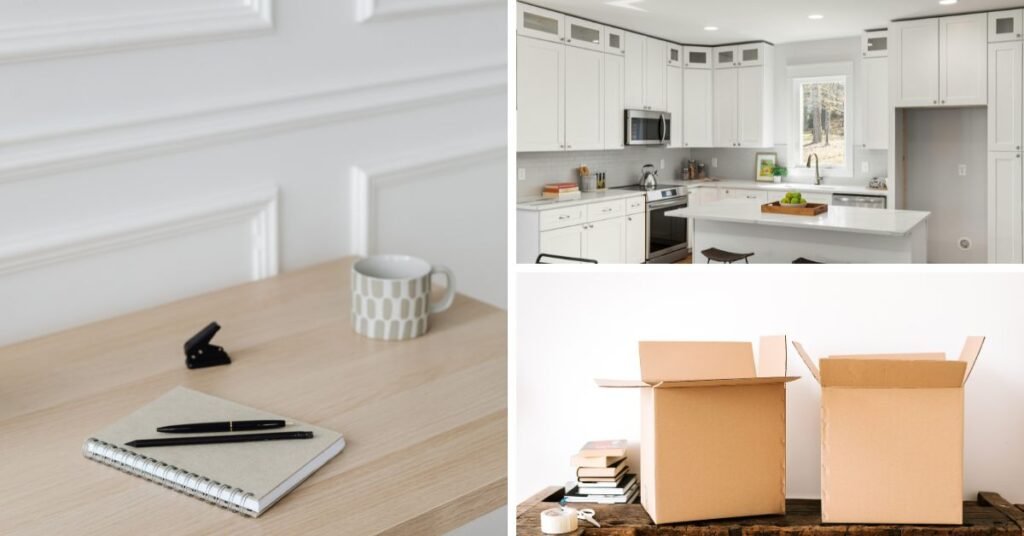
Our brain processes everything in its field of view, whether or not we’re consciously attending to it. A surface crowded with objects is not a neutral background, it’s an active demand on a small but real portion of your cognitive resources, sustained for as long as you’re in the room.
The slow living swap is not minimalism for its own sake. It’s intentional selection.
The question to apply to every object on a surface is not “should I own this?” but “does this earn its place in my field of vision?” Some things do a plant that brings life to the room, a single piece of ceramics that genuinely pleases you, or a book you’re currently reading. Others are simply there because they haven’t been moved.
Start with one surface. Choose the one you look at most: the kitchen counter, the coffee table, the windowsill above the sink. Clear it entirely.
Then return only the objects that belong there by active choice rather than passive default. Notice what the cleared surface does to the feeling of the room.
This is not a one-time exercise. Surfaces accumulate gradually and require a regular, gentle reset, which is one reason a brief surface clear is a useful element of a weekly reset routine. The habit of returning surfaces to their intentional baseline is what prevents the drift from becoming the default.
What you’re creating when you clear a surface is not emptiness, it’s visual rest.
Negative space in a room functions the same way silence does in a conversation: it allows what’s present to be actually heard, rather than lost in the background noise.
Swap 4: Artificial Scent for Natural, Subtle Fragrance
Scent is the most direct sensory pathway to mood and emotional state.
Unlike sight or sound, olfactory signals reach the brain’s emotional and memory centres almost immediately, bypassing much of the conscious processing that other senses go through. This makes the ambient scent of your home one of the most powerful and most underused tools for shaping how you feel within it.
Most modern homes, however, approach scent through synthetic means: air fresheners, plug-in diffusers, artificially fragranced candles, fabric softeners designed to produce a manufactured “freshness.”
These products are effective at producing a scent, but the quality of that scent, its complexity, its subtlety, its relationship to anything natural is fundamentally different from the scent that comes from actual plant material.

The slow living swap is not necessarily more expensive, it's just more considered.
Some ideas include:
- A bunch of eucalyptus hung near a shower, where steam releases its oil gradually.
- A small dish of dried lavender on a bedside table.
- A soy or beeswax candle made with genuine essential oils rather than synthetic fragrance compounds.
Fresh air, admitted regularly through open windows, which carries the scent of the outdoors and the season in a way that no manufactured product replicates.
Natural scent is almost always subtler than synthetic scent. This is a feature, not a limitation. The goal is not a strongly fragranced room; it’s a background sensory quality that feels calm, clean, and grounded rather than artificially perfumed. Many people find that after transitioning away from synthetic home fragrances, their sensitivity to natural scent increases noticeably, and that the synthetic versions they previously used begin to feel overwhelming rather than pleasant.
The connection between scent and season is also worth noting.
Incorporating seasonal botanicals, citrus in winter, herbs in summer, dried flowers in autumn, is one of the simplest and most effective ways to make your home feel connected to the natural rhythm of the year, which is itself a core value of slow living.
Swap 5: High-Contrast Patterns for Grounding, Earthy Tones
Color is a language that your environment speaks continuously, and like any language, its effect depends significantly on what it’s saying.
High-contrast, saturated, or very bright color schemes are visually energizing, which is appropriate in some contexts and less so in others.
The same quality that makes a bold pattern or bright accent wall feel exciting in a café or a retail environment can make a home feel difficult to truly rest in.
When every corner of a room is competing for visual attention, the cumulative effect is stimulating rather than settling.
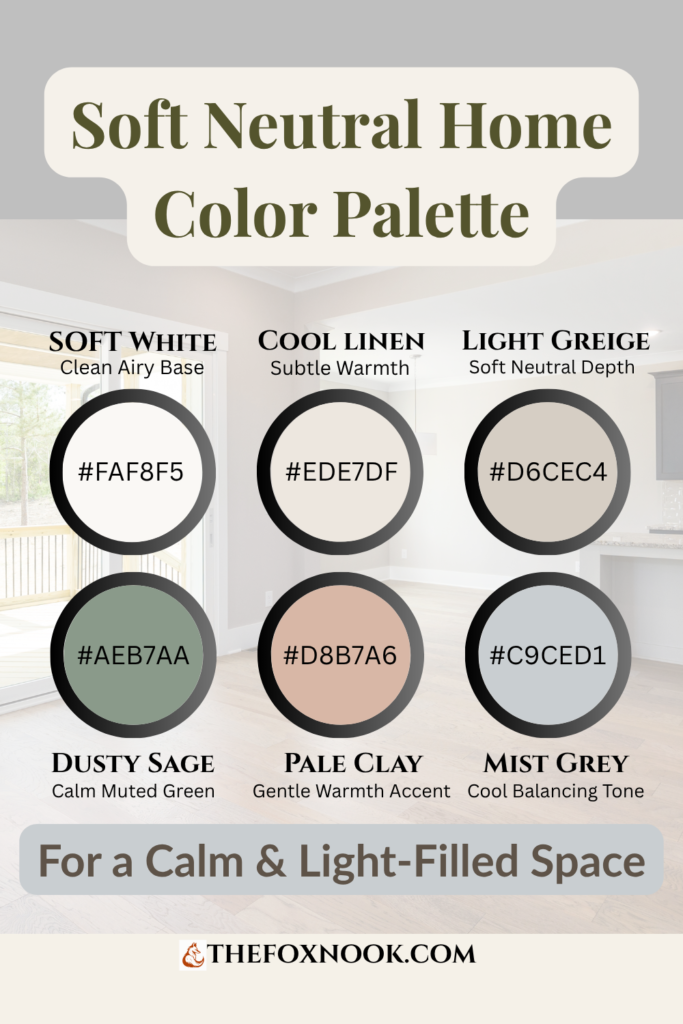
The slow living approach to color is not about eliminating it; it’s about the quality and temperature of the tones you choose.
Colors drawn from natural environments, the muted sage of dried herbs, the warm terracotta of clay, the soft beige of undyed linen, the blue-grey of a cloudy sky, have a quieter visual presence. They don’t disappear, but they don’t demand. They provide a backdrop against which other elements, a plant, a piece of ceramics, a pool of lamplight, can register fully rather than compete.
Practically, you don’t need to repaint your walls to introduce this quality. Textiles are the most accessible entry point: cushion covers, throws, rugs, and curtains in earthy, muted tones shift the visual temperature of a room meaningfully without major intervention. Replacing one visually loud element, a bright throw, a high-contrast rug, with something quieter can change the feeling of an entire room.
It’s also worth considering the color quality of your lighting in relation to your walls and textiles.
Warm-toned light and earthy, muted colours work together in a way that cool-toned light and the same palette do not. The two swaps, lighting and color, compound each other when both are addressed.
Swap 6: Plastic Decor for Living Greenery and Natural Elements
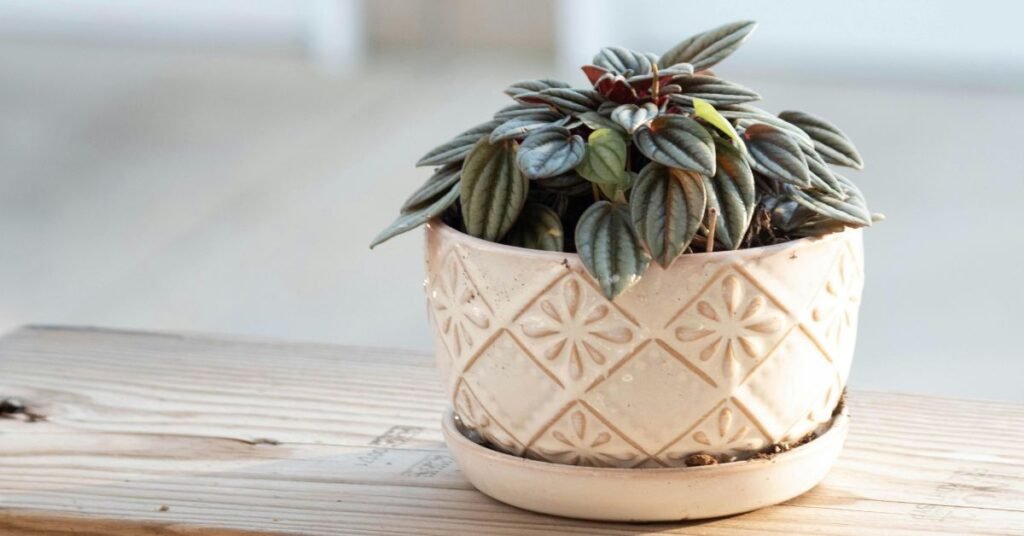
The research on this point is now well-established: the presence of natural elements, plants, water, wood, stone, and natural light in an interior environment has measurable effects on mood, stress levels, and the experience of a space.
This isn’t a wellness trend. It’s a consequence of the fact that human beings evolved in natural environments and remain, neurologically and physiologically, oriented toward them.
Plastic and synthetic decor mass-produced faux plants, artificial flowers, decorative objects made entirely of manufactured materials fill visual space without providing any of the sensory qualities that natural materials do.
A plastic plant looks like a plant from a distance, but:
× It doesn’t move in air currents.
× It doesn’t grow or change.
× It doesn’t contribute to the air quality of the room.
× It doesn’t carry the subtle, grounding quality that comes from something alive.
The slow living swap is not necessarily a commitment to an elaborate indoor garden.

One low-maintenance plant in a room where you spend significant time is meaningful in its presence, its small daily changes, and its requirement of occasional attention, all of which contribute to a quality of aliveness in the space that no synthetic object provides.
Good options for low-maintenance indoor plants include the snake plant (Sansevieria), the pothos, the ZZ plant, and the peace lily, all of which tolerate variable light conditions and irregular watering without complaint. A single plant in an earthy ceramic pot, placed where it will get reasonable light, is one of the most effective and least expensive slow living home swaps available.
Beyond plants, natural elements such as a piece of driftwood, a bowl of stones, seasonal branches in a vase, and fresh fruit on a table bring a quality of texture and organic imperfection that manufactured decor doesn’t offer.
Remember: The slow living home is not sparse; it’s selectively natural.
Swap 7: Temporary, Flat-Pack Furniture for Solid, Considered Pieces
This swap is distinct from the others in that it’s the most gradual and, in some cases, the most significant investment. It’s also one of the most meaningful shifts in how a home feels over time.
Much of the furniture available at accessible price points is made from particleboard, MDF, or laminate materials that look presentable when new but lack the physical weight and tactile quality of solid wood, rattan, stone, or reclaimed materials.
They’re also, almost without exception, not designed to last: they show wear quickly, don’t age well, and are difficult or impossible to repair.
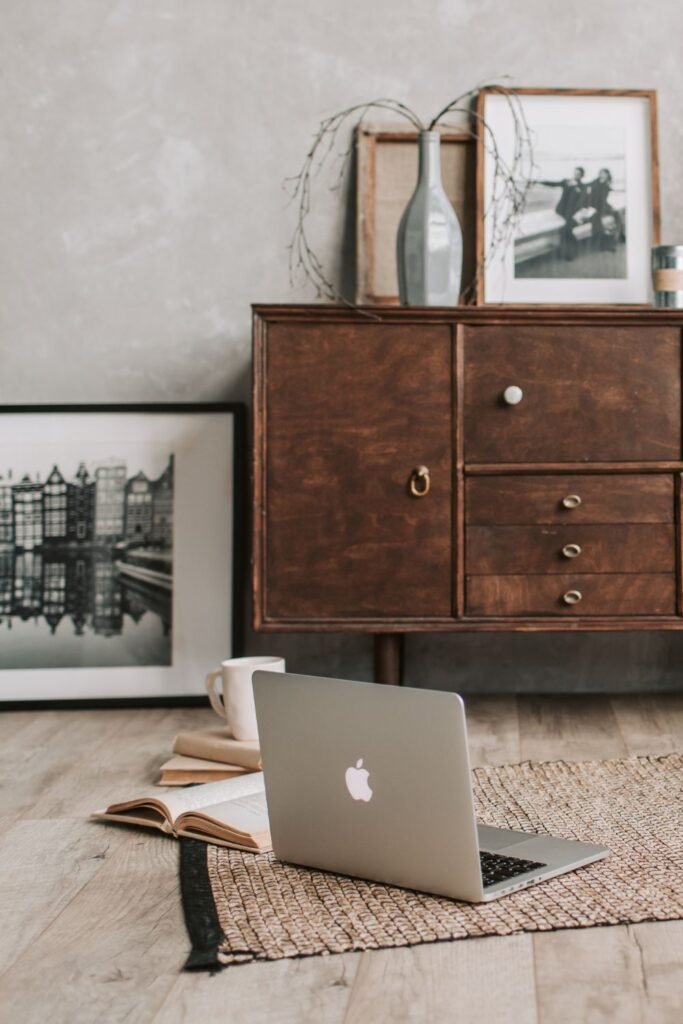
The slow living relationship with furniture is, at its core, a relationship with permanence.
A solid wooden table that will still be in use in twenty years. A rattan chair that develops character rather than deteriorating. A secondhand piece of furniture that already carries the evidence of a long life and will carry more. These objects create a different quality of presence in a room; they feel like they belong there, rather than occupying temporary space until something better comes along.
The practical approach to this swap is patience rather than budget: rather than replacing several items at once, identify the piece of furniture in your home that matters most to you, the one you interact with most, or the one whose quality most affects how a room feels, and invest there first. Secondhand markets, vintage shops, and online resale platforms are often the best sources, both for price and for the quality of materials available in older pieces.
One solid, considered piece of furniture can anchor an entire room in a way that no collection of inexpensive alternatives can achieve.
Swap 8: Defaulting to Screens for a Dedicated Restorative Corner

Digital devices are, by design, compelling.
Their architecture is built around capturing and holding attention, generating small but continuous hits of novelty that make it difficult to set them down and stay still.
Of course, by no means is this a moral argument against technology.
It’s simply a recognition that a home in which every quiet moment defaults to a screen is a home in which genuine rest, the restoration of mental energy, and the experience of being fully present in a physical space become increasingly rare.
The slow living swap is not the elimination of screens. It's the creation of at least one alternative.
A corner of your home doesn’t need to be large, or specially furnished, or beautiful in any particular way that is associated with screen-free time. A reading chair with a lamp. A comfortable spot near a window with a journal. A place where the morning cup of tea is drunk without a phone in the other hand.
The physical designation matters. When a corner of your home is consistently used for a particular kind of activity, reading, writing, quiet thinking, or simply being still, it begins to carry that association. Sitting in that chair begins to feel like an invitation to settle rather than a moment between activities.
This is a swap that costs nothing if you already have a chair you’re not using deliberately, and very little if you don’t.
Its return is not in aesthetics but in the quality of the time spent there, which, over weeks and months, represents a meaningful shift in how your home supports your daily life.
Swap 9: Impulse Purchases for Intentional Curation
Every object that enters your home changes it slightly. This is a fact that’s easy to lose sight of when objects arrive frequently, casually, and without much deliberation: an online order placed on a slow afternoon, a decorative item picked up because it was there and inexpensive, a duplicate of something you already own because it was on sale.
Slow living home design is, in part, a curation practice.
Not in the influencer sense of the word, not a performance of aesthetic consistency, but in the more fundamental sense of making genuine decisions about what earns a place in your space.

The slow living swap in purchasing habits has two practical components.
The first is a pause: before bringing something new into your home, a brief question about whether it adds genuine value, beauty, function, meaning, or simply fills a moment of wanting. This is a lighter version of the waiting period discussed in other contexts, applied specifically to the objects that will share your living space. Many things that feel compelling in the moment of browsing don’t survive even a day’s delay.
The second is a preference for less but better: choosing one object that you genuinely love over three that are merely acceptable. This is not always about spending more; secondhand and handmade objects at very modest prices can have more genuine quality and meaning than new mass-produced alternatives. It’s about the relationship between you and the things you live with, and the difference between owning things that feel chosen and owning things that simply accumulate.
A home shaped by intentional curation has a different quality than one shaped by accumulation. It’s not necessarily emptier. It’s more itself more reflective of what you actually value, rather than what was available at the moment of purchase.
This connects directly to the intentional spending habits and how to live on one income stream guide we have previously covered on Fox & Nook.
The same principle applies to the objects that will share your living space.
Swap 10: Rushed Transitions for Small, Grounding Rituals
The final swap in this guide is different from the others. It’s not about an object, a material, or a visual choice. It’s about the texture of time inside your home, specifically, the moments of transition that punctuate every day.
Most modern lives are characterised by continuous forward movement. One task finishes and the next begins. One screen is closed, and another is opened. Meals are prepared while mentally in the next hour.
The physical experience of being at home becomes a backdrop to a continuous stream of activity and information rather than an environment that’s actually inhabited.
The slow living swap is to mark transitions with small, deliberate rituals.
Not elaborate routines, just brief, consistent practices that signal a shift from one part of the day to the next and create a moment of genuine presence in the process.
You can learn more about morning rituals & evening routine recommendations in our dedicated guides.

Opening a window and standing at it for a moment when you wake up. Making a cup of tea and drinking it without doing anything else. Light a candle when the afternoon becomes evening. Washing your hands slowly, as an actual pause, when you come home.
These are not productivity techniques. They are small acts of inhabiting your life rather than moving through it.
The home supports these rituals when it’s arranged to make them easy: a kettle and mugs in a place that invites the morning ritual, a candle accessible rather than stored, a comfortable chair that’s actually used rather than preserved. The physical environment and the daily practice reinforce each other.
This swap, more than any other on this list, is what slow living actually means in daily practice.
Not a particular aesthetic. And not a curated set of objects either.
It is all about the quality of attention brought to ordinary moments and a home that is shaped to invite that quality of attention rather than to work against it.
Where to Begin
Ten swaps are ten decisions. That’s not where to start.
Start with one. The swap that requires the least cost or effort, or the one whose effect you’re most curious about. Try it for a week. Notice whether it changes anything about how you feel in your home, even slightly.
Slow living, applied to home design, is a cumulative practice. No single swap transforms anything. But a series of small, deliberate changes layered over time, each one chosen because it genuinely fits your life and your space, builds something real: a home that reflects how you want to live, and that makes living that way a little easier every day.
That’s not a renovation. It’s a direction. ♥️
Slow Living Home Swaps: Frequently Asked Questions & Tips
What exactly is a slow living home?
A slow living home is an environment that has been shaped, gradually and deliberately, to support a calmer and more intentional quality of daily life. It’s not defined by a specific aesthetic; it doesn’t need to look minimalist, rustic, or any particular way.
What distinguishes it is the intention behind the choices: furniture chosen for longevity and material quality rather than trend or price; lighting arranged to support the rhythm of the day rather than maintain constant brightness; surfaces cleared to reduce visual noise rather than simply to look tidy.
In practice, a slow living home is one that feels genuinely restful to be in, where the environment is working with your wellbeing rather than against it.
Do I need a large budget to create a more intentional home?
No, and in many cases, the most impactful changes cost nothing at all. Clearing a surface, rearranging a lamp, opening a window, and designating a corner of a room as a screen-free space are free. Replacing a synthetic throw with a natural cotton one, or adding a single low-maintenance plant, can be done for very little.
The slow living approach to home design is explicitly not about spending more; it’s about choosing better and accumulating less. The most useful reframe is from “what should I buy?” to “what should I remove, change, or use more deliberately?”
Can I make slow living home swaps in a rental property?
Yes, with very few exceptions. Most of the swaps in this guide are entirely portable: lighting, textiles, scent, plants, the objects on your surfaces, purchasing habits, and daily rituals require no permanent changes to the property. Even the furniture swap can be approached through secondhand and vintage pieces that move with you.
Rental living doesn’t prevent you from shaping your environment with intention; it just places the emphasis more firmly on the portable and the temporary, which is entirely consistent with slow living values.
How is slow living home design different from minimalism?
Minimalism and slow living home design actually share some values; both emphasise intentionality, the idea that less is sometimes more, and a skepticism of accumulation for its own sake. But they’re also different in important ways.
→ Minimalism is often primarily aesthetic: the visual experience of a space with very few objects.
→ Slow living home design is primarily experiential: the way a space feels to live in, regardless of how many objects it contains.
A slow living home might have books stacked on shelves, plants in varying stages of growth, handmade objects with irregular shapes, and textiles in layers. It might look, to a strict minimalist eye, quite full. What it won’t have is clutter in the sense of unresolved, unconsidered accumulation. The distinction is between fullness that is chosen and density that is simply what happened.
How long does it take to notice a difference?
The lighting swap tends to produce an effect almost immediately. The difference between a room lit by warm lamps in the evening and the same room under bright overhead light is noticeable the same day.
Surface clearing and plant introductions also produce relatively quick results.
The slower swaps of furniture and textiles are gradually replaced, and purchasing habits over time are felt cumulatively rather than immediately.
Most people who approach their home with slow living values describe the changes compounding over weeks and months: a gradual shift in how the home feels, and in their own relationship to being in it.
The Home That Works With You
Your home is not a backdrop. It’s a participant in the quality of your rest, the ease of your morning, the depth of your evenings, the texture of your daily experience.
The swaps in this guide are small. None of them alone will transform anything. But each one is a small decision in the same direction: toward a home that asks less of you, gives more back, and makes the kind of life you want to live a little more available within the walls you already have.
That’s slow living, in practice. Not a philosophy on a shelf. A series of small choices, made consistently, over time.

[…] Intentional Life Slow Living Home Swaps […]
[…] Intentional Life Slow Living Home Swaps […]
[…] most consistently overlooked elements of how a home feels to live in day to day. As explored in our slow living home swaps post, the shift from harsh overhead lighting to warm, layered light is one of the fastest and most […]
[…] complaint, adds a note of life to what is often a purely functional space. As explored in our slow living home swaps post, even a small natural element meaningfully changes how a space […]
[…] Easy Home Swaps for a Slower, More Intentional Life […]