
Affiliate Disclosure:
This article may contain affiliate links. If you choose to purchase through them, Fox & Nook may earn a small commission at no additional cost to you. We only reference products we believe align with intentional, functional living.
Introduction: To Live On One Income
There’s a version of this conversation that starts with the assumption that living on one income is a problem to be solved, a financial gap to be closed, a lifestyle to be endured.
This isn’t that version.
Living on one income is something that a surprisingly large number of people are doing right now, or are actively working toward, for all kinds of reasons. A partner who has stepped back from work to raise children. A redundancy that became an opportunity to reassess. A deliberate choice to trade earning potential for time, freedom, or presence. A health situation, a career transition, a season of life that simply looks different from what was planned.
Whatever the reason, the practical reality is the same: one income needs to do the work that two incomes used to do, or that two incomes were assumed to be required to do. And that requires a different relationship with money, with spending, and even with what “enough” actually means.
This guide doesn’t promise that it’s easy. It won’t tell you that a few small habit changes will make the gap disappear. But it will give you a clear, honest, and practical framework for making one income work, not just as a financial calculation, but as a way of living that can feel considered, calm, and genuinely sustainable over time.
Quick Overview
This guide on how to live well on one income covers:
- The mindset shift that makes everything else possible
- Understanding your actual numbers
- Your biggest expenses first, where the real leverage is
- Groceries and food, the most flexible large expenses
- Intentional spending to break the habit of unconscious consumption
- Building a simple, sustainable budget system
- Finding joy and richness at home without spending
- When extra income makes sense and when it doesn’t
- A summary of practical habits
- FAQs
1. The Mindset Shift That Makes Everything Else Possible
Before any of the practical strategies, there is a more fundamental shift required, and it’s the one that most financial guides skip over entirely because it’s harder to put in a bullet point.
Living well on one income requires changing your relationship with the idea of enough.
Most of us absorbed, largely without choosing to, a set of assumptions about what a normal, comfortable life looks like. A home of a certain size. A car that’s relatively new. Regular meals out. The ability to buy something when you want it without deliberating too long. Holidays, new clothes when the old ones wear out, and the small treats that make a week feel manageable.
None of these things are inherently wrong. But when they’re treated as baseline expectations rather than active choices, they become very difficult to examine honestly. And that difficulty is precisely what makes the transition to one-income living feel like deprivation to some people, not because they’re actually lacking anything essential, but because the gap between expectation and reality is being experienced as loss.
The shift is this: from passive consumption to active intention.
It means asking, genuinely and without defensiveness, whether each significant expenditure reflects something you actually value or whether it’s a habit, a default, a response to social pressure, or a way of filling time. This isn’t a moral question. It’s a clarifying one.
When spending becomes intentional rather than automatic, two things tend to happen:
The first is that you naturally spend less because a significant portion of what most people spend money on doesn’t survive honest scrutiny. The second is that what you do spend money on begins to feel more meaningful because it was chosen, not just defaulted to.
This mindset doesn’t arrive fully formed. It develops gradually, through practice, through the occasional uncomfortable conversation with yourself, and through experiencing firsthand that many of the things you assumed were necessities turn out to be entirely optional. Most people who’ve lived on one income for any length of time describe the same arc: initial difficulty, gradual recalibration, and eventually a sense of clarity and lightness that the previous level of spending never actually provided.
That’s the foundation. Everything else is practical.
2. Understand Your Actual Numbers

Before making any changes to how you spend, you need a clear and honest picture of how you currently spend. This sounds obvious, but most people, including those who consider themselves relatively financially aware, are operating from a rough approximation of their finances rather than a precise one.
Vague awareness is not the same as understanding. And you cannot make good decisions about a one-income budget without genuine clarity about where the money actually goes.
Start with your income, the real number.
Not your gross salary. Your actual take-home pay after tax, national insurance contributions, pension contributions, and any other deductions. This is the number you’re actually working with, and it’s often lower than people instinctively reference when they think about what they earn.
Then map your fixed expenses.
These are the commitments that leave your account every month regardless of your choices: rent or mortgage, utilities, insurance, phone, internet, subscriptions, loan repayments, and any other recurring payments. List them. Add them up. Know the total precisely.
Then track your variable spending for at least one full month.
Groceries, fuel, clothing, eating out, entertainment, personal care, household items, impulse purchases, everything. The specific method matters less than the discipline of doing it at all. A simple spreadsheet, a dedicated notebook, or a budgeting app each works well. What you’re looking for is not a way to feel guilty about past spending, but an honest data set from which to make informed decisions going forward.
Most people find this exercise surprising in at least one category. Sometimes dramatically so.
The gap between what people estimate they spend on food, or on casual online shopping, and what they actually spend when the numbers are laid out is frequently significant. Of course, that gap shouldn’t be perceived as a moral failure; it’s simply what automatic spending looks like in practice. The value of this exercise is that it removes the automatic and replaces it with awareness.
Once you have a clear picture of income versus outgoings, you can make real decisions.
Until then, inevitably, you’re adjusting a budget you don’t yet fully understand.
3. Your Biggest Expenses First
Here is something that a lot of frugal living advice gets quietly wrong: it focuses on the small.
Cut the coffee. Cancel the streaming service. Skip the takeaway. These suggestions are not necessarily wrong; indeed, small savings do accumulate, but they obscure a more important truth: the size of the savings needs to be proportional to the size of the expense.
→ An hour spent optimising your grocery shop might save you $30 a month.
→ An hour spent reviewing your housing costs might save you $300.
→ The effort is the same. The outcome is not!
When you’re building a life on one income, the most productive place to direct your attention first is your largest fixed expenses, the ones that leave your account every month regardless of your choices.

Housing is typically the biggest. The question worth asking honestly is not whether your current home is comfortable, but whether its cost is proportionate to a single income. This might mean exploring whether refinancing is an option, whether moving to a smaller or less central property would be a meaningful reduction, or whether there are aspects of your current housing arrangement that could be adjusted. These are not easy conversations, and they don’t always lead to action. But they deserve to be had before you spend three months optimising your grocery budget.
Transport is typically the second largest. Two cars on one income is a significant monthly commitment not just in finance payments, but in insurance, fuel, maintenance, and taxes. Whether one car, a smaller car, or different transport arrangements would genuinely work for your household is worth a clear-eyed assessment rather than an assumption that things need to stay as they are.
Debt repayments deserve particular attention. The monthly cost of servicing debt, particularly high-interest consumer debt, can absorb a substantial portion of a single income, making everything else harder. If significant debt repayments are part of your fixed outgoings, addressing them strategically (rather than simply managing them) is one of the highest-return uses of any financial headroom you can create.
Subscriptions and recurring services have a habit of accumulating quietly in the background. A review of every direct debit and standing order leaving your account, not just the big ones, often reveals services you’ve forgotten about, duplicate coverage, or things you’re paying for that you could live without.
The principle is simple: address the big things before refining the small things. The small savings matter, but they compound most effectively on a foundation of housing and fixed costs that are genuinely proportionate to your income.
4. Groceries and Food: Your Most Flexible Large Expense If You Live On One Income
After fixed costs, food is typically where the most meaningful day-to-day financial decisions happen and where many households have the most room to adjust without affecting quality of life.
Unlike housing or transport, food spending is genuinely flexible. The same nutritional needs can be met at very different price points depending on how intentionally you approach buying and preparing food. This isn’t about eating poorly or feeling deprived. It’s about the difference between a relationship with food that’s largely automatic and one that’s been given a little thought.
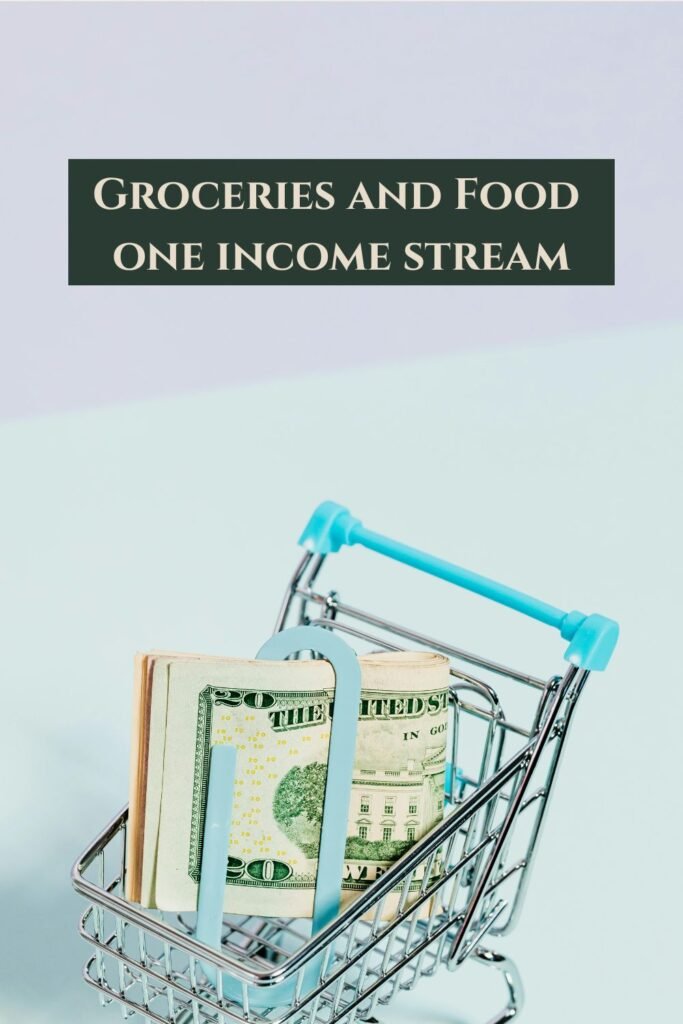
Meal planning is the single most effective food-budget habit. Not elaborate, Social Media-perfect weekly meal plans, just a simple decision, made once at the beginning of the week, about what you’re going to eat. This one habit reduces impulse purchases, eliminates the daily decision fatigue of “what’s for dinner,” and dramatically cuts food waste, which for most households represents a meaningful hidden cost.
Shopping from a list and sticking to it is the direct consequence of meal planning. Going to a supermarket without a list is, from a budgeting perspective, essentially the same as browsing an online shop without an intention to buy anything specific. The environment is designed to encourage unplanned spending, and it does so very effectively.
Cooking from base ingredients rather than heavily processed or pre-prepared foods is almost always cheaper, healthier, and, with a little practice, not significantly more time-consuming. Learning a handful of reliable, simple recipes that you return to regularly is more useful than an ambitious repertoire that rarely gets used.
Reducing food waste is a separate discipline, but an important one. The average household wastes a significant proportion of the food it buys, which means a meaningful proportion of the grocery budget is effectively being discarded. Buying what you know you’ll use, using older items before newer ones, and being creative with leftovers are all habits that compound over time.
Eating out is one of the highest hidden costs in most households’ food budgets. The occasional meal out or takeaway isn’t the issue, but regular, reflexive eating out because no one has planned or prepared anything is worth examining. Reducing this to something intentional rather than habitual is one of the quickest ways to create meaningful room in a one-income budget.
5. Intentional Spending: Breaking the Habit of Unconscious Consumption

Beyond the large fixed expenses and the grocery budget, much of what people spend money on falls into a category that’s harder to define but very easy to recognise: the accumulated weight of small, habitual, largely automatic purchases.
The online order was placed without much thought. The trip to a shop that began with one specific need and ended with several unrelated additions. The subscription that started as a trial was never actively decided on again. The new version of something that already works.
None of these is dramatic. Individually, most of them feel reasonable at the time. But across a month and a year, they represent a significant portion of discretionary spending, and they share a common characteristic: they weren’t really chosen. They happened…
The antidote is not restriction. It’s awareness.
A few practical habits that can make this tangible:
A short waiting period before non-essential purchases. For anything that isn’t an immediate need, introducing a pause of 24 hours for smaller items, a week for larger ones, changes the quality of the decision. Many purchases that felt compelling in the moment are simply no longer interesting after a brief delay. This isn’t discipline; it’s giving yourself time to want the thing rather than react to it.
A regular spending review, either weekly or as part of a broader weekly reset routine, is a brief look back at what was left in your account and whether it aligns with what you actually value. Without this, spending patterns stay invisible and therefore unchanged.
Distinguishing between spending that adds genuine value and spending that fills time, manages discomfort, or responds to social comparison. This is the deeper version of the mindset work from the first section, brought into the practical detail of everyday decisions. Shopping as entertainment, as mood management, or as a response to feeling that your home or life needs something it currently lacks are patterns that are worth recognising and addressing at the root level rather than only managing the symptoms.
Second-hand and alternative sourcing as a first consideration rather than a fallback.
For clothing, homeware, furniture, books, and many other categories, buying secondhand or swapping with others before buying new can be an effective habit that reduces spending without reducing quality of life in any meaningful way.
6. Building a Simple, Sustainable Budget System
The word “budget” has an unfortunate reputation. For many people, it carries associations of restriction, of spreadsheets filled with guilt, of a complicated system that needs to be maintained perfectly or not at all. This reputation is largely undeserved, and it tends to prevent people from doing something that would help them considerably.
A budget, in its most useful form, is simply a plan for where your money goes before it leaves your account. It doesn’t need to be complicated. It doesn’t need to account for every single dollar, euro, or pound. It needs to be clear enough to make decisions from, and simple enough that you’ll actually use it.
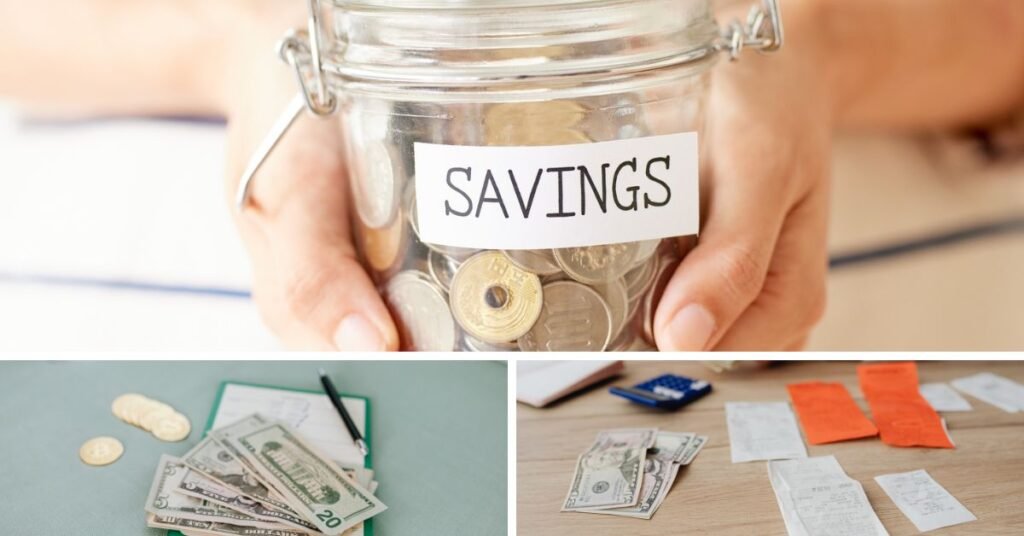
A straightforward structure on how to live on a one-income budget:
Begin with your monthly net income, the real take-home figure. From this, subtract your fixed, non-negotiable commitments such as your rent/mortgage, utilities, insurance, medical or other crucial subscriptions, and debt repayments. What remains is your actual discretionary income, the pool from which everything else comes: food, transport, clothing, entertainment, personal spending, and savings.
Allocate this remaining amount to broad categories, not exhaustive subcategories, with a realistic number assigned to each. Groceries. Transport costs. Personal spending. Entertainment and eating out. Household and miscellaneous. Savings.
The savings category deserves particular attention. On one income, building even a modest emergency fund changes the quality of the financial situation considerably. A small, unexpected expense like a car repair, an appliance replacement, or a medical cost that would otherwise require debt or significant stress becomes manageable when there’s a financial buffer, however modest. Even a small regular contribution to savings, made consistently, builds this buffer over time.
The envelope method for budgeting, either literal or digital, is a practical way to manage discretionary categories without constant mental calculation. Once the grocery envelope is empty for the month, the grocery budget for the month is spent. This constraint, experienced as a simple fact rather than a moral judgement, changes spending behaviour naturally and without requiring willpower.
Review the budget monthly, at a minimum, and adjust as reality requires. A budget that doesn’t reflect how life actually works isn’t a useful tool. The point is not to follow a plan perfectly, but rather to have a clear picture of your financial situation and to make deliberate decisions within it.
7. Finding Richness at Home (Without Spending to Create It)
One of the quieter, yet more valuable discoveries that many people make when they begin living more intentionally on one income is that a significant portion of what they used to spend money on was, at its core, an attempt to create a feeling.
The feeling of comfort, of stimulation, of treating themselves, of having something to look forward to.
The interesting realisation is that most of those feelings are available without spending; they just require a bit more intention to create than reaching for a card does.
Let’s explore some tips on how to create a rich experience at home on a single income stream:
The home becomes the primary resource. Investing attention and small amounts of effort into making your home feel genuinely pleasant, calm, and personal is one of the highest-return uses of time for someone living on one income. Not expensive renovations or constant new purchases but the kind of care and thoughtfulness that makes a space feel considered. A clean, well-organised home that reflects your taste and serves your actual life creates a quality of daily experience that no amount of money spent outside it can replace.
Simple pleasures, protected and made deliberate, carry more value than their cost suggests:
A good book from the library.
A long walk.
A meal cooked at home with care and a degree of attention.
A film watched intentionally rather than scrolled past.
An evening of quality family time with no distractions.
These aren’t consolation prizes for not spending money elsewhere; they’re genuinely good uses of time that tend to produce more satisfaction than expensive alternatives, provided they’re chosen rather than defaulted to.
Social connection doesn’t require spending. Much of what passes for entertainment in modern life restaurants, bars, events, experiences is expensive primarily because the social infrastructure around them has been commercialised. Hosting people at home, cooking together, walking somewhere together, sharing an interest or a project these are not lower-quality versions of spending time with people. For many people, they’re more meaningful.
Learning and developing skills is one of the most underrated resources for people on a single income. Cooking well, basic home maintenance, gardening, making things each skill learned reduces a category of spending and adds a category of satisfaction simultaneously. The library, free online resources, and the simple practice of trying things are all available without cost.
8. When Extra Income Makes Sense, and When It Doesn't
There’s an important question you are likely to encounter when you live on one income:
Should I be trying to earn more?
The honest answer is: sometimes yes, sometimes no, and it’s worth being clear about which situation you’re actually in.
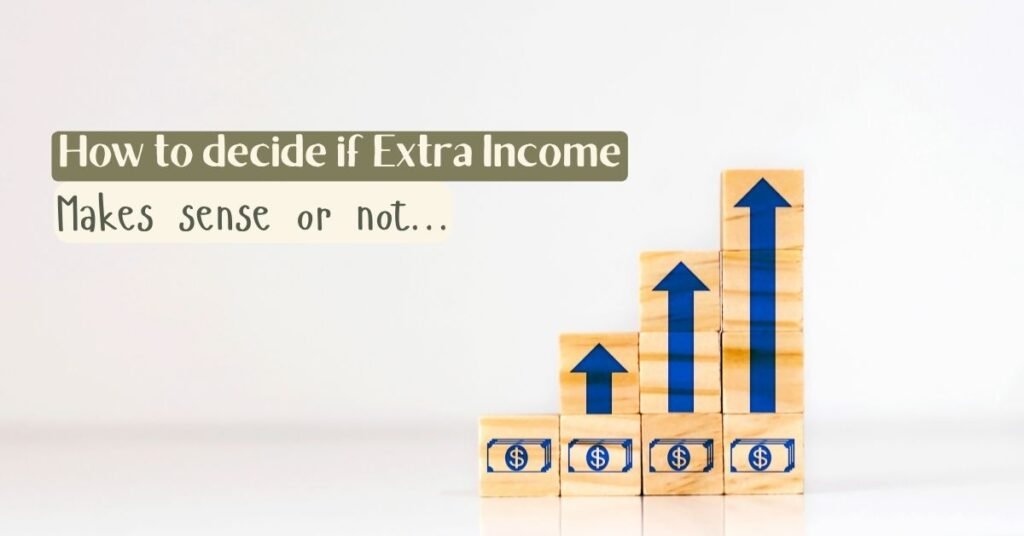
When extra income is the right lever:
If you’ve worked through your budget honestly, addressed the big fixed expenses, and reduced unconscious spending, and the numbers still don’t work for your actual circumstances, then additional income is the appropriate response. This isn’t a moral judgement. Some situations are genuinely financially tight, and there is no amount of frugality that makes them otherwise.
In such cases, a small additional income stream can change the situation significantly. Not the wildly optimistic versions that circulate online, but modest, realistic ones: freelance work in a field you already have skills in, a small service offered locally, selling things you make or no longer need, or part-time work that fits around existing commitments. These don’t require large time investments to produce a meaningful financial contribution.
When extra income is the wrong lever:
If the gap between income and outgoings is primarily driven by expenses that haven’t been honestly examined, more income will expand spending rather than resolve the underlying issue. This is a pattern well-documented in personal finance: income rises, lifestyle rises to meet it, and the sense of financial pressure remains roughly constant. Addressing the spending side first means that additional income, if and when it comes, actually creates financial breathing room rather than being absorbed.
On the subject of side hustles and online income:
There is a great deal of noise online about blogging, content creation, and digital income as accessible ways to supplement a single income. Some of it is realistic.
Much of it is not, or rather, it’s realistic at a time horizon and level of investment that isn’t acknowledged clearly.

Building a meaningful online income genuinely takes time, consistency, and a tolerance for an extended period of effort without financial return. For the right person with the right circumstances, it can be worthwhile. For someone who needs additional income within the next few months, it’s rarely the most practical solution.
The more useful question is not “what could I eventually build?” but “what can I actually do, with the skills and time I have right now, to earn a small but reliable addition to our income?”
Practical Habits: A Summary for Life on One Income Stream
If you’re building toward one-income living, or refining how you currently manage it, here is a consolidated overview of the habits and principles this guide covers:
Area | The Practical Habit |
Shift from automatic spending to active, intentional choices | |
Know your real take-home income and track actual spending for one full month | |
Address housing, transport, and debt before optimising smaller categories | |
Meal plan weekly, shop from a list, reduce food waste, and reflexive eating out | |
Introduce a waiting period for non-essentials; review spending regularly | |
Allocate income to broad categories before spending; build even a small emergency fund | |
Invest attention in your home and in low-cost, high-quality daily pleasures | |
Consider only after the spending side is genuinely addressed |
Frequently Asked Questions & Tips
Is it actually possible to live comfortably on one income today?
Yes. However, “comfortably” needs to be defined on your own terms rather than by external reference points. Many people living on a single income describe a quality of life they wouldn’t trade: more time, clearer priorities, and less financial anxiety once the adjustment period has passed.
What it generally requires is a genuine reassessment of fixed costs and an honest look at spending habits, rather than simply trying to maintain a two-income lifestyle on half the money. The transition is real and takes time, but sustainable one-income living is not only possible, but it’s also something a significant number of people are doing deliberately and with satisfaction.
How do I start a budget when I've never budgeted before?
Start with the simplest possible version. Write down your monthly take-home income. List every fixed commitment that leaves your account each month and total them. Subtract from your income. What remains is your working money for the month. Divide it into four or five broad categories: food, transport, personal spending, household, and savings, and assign a realistic number to each.
That’s a budget. It doesn’t need to be more complicated than this to be effective, especially in the beginning. Complexity can come later if you find it useful; clarity is what matters first. 💡
What should I prioritise if money is very tight right now?
In order:
First, make sure the essential fixed costs are covered: housing, utilities, basic food, and any debt minimum payments.
Second, build even a very small emergency buffer even a modest amount set aside specifically for unexpected expenses changes the quality of the financial situation significantly.
Third, identify the single largest area of variable spending where you have genuine flexibility and address that specifically, rather than trying to change everything at once.
Small, sustainable changes compound. Attempting to overhaul everything simultaneously tends to produce a brief effort followed by a return to previous habits.
How do I deal with the social pressure of spending less than people around me?
This is one of the more underacknowledged challenges of one-income living, and it deserves a direct answer. Social comparison is a genuine source of difficulty, and it doesn’t resolve itself simply by deciding to care less. What tends to help is building social connections around shared interests and activities rather than shared spending and being honest, without oversharing, about the fact that your circumstances are different.
Most people respond to honesty with more understanding than the fear of judgment suggests.
And over time, the clarity that comes from living in alignment with your actual values tends to reduce the weight that social comparison carries.
Are budgeting apps actually useful for one-income households?
They can be, particularly for the tracking stage, building a clear picture of where money currently goes. The most useful ones make it easy to categorise spending, see patterns over time, and identify where the real variability is.
Whether a digital app or a simple physical notebook works better depends entirely on personal preference; both achieve the same outcome. What matters is consistency of use rather than the sophistication of the tool. A basic system you actually maintain is more valuable than a comprehensive one you abandon after two weeks.
How long does it take to adjust to one-income living?
Most people describe an adjustment period of between three and six months before the new patterns begin to feel natural rather than effortful. The first month involves the most active decision-making, reviewing expenses, changing habits, and navigating the gap between what was automatic and what is now deliberate. By three months, the major changes tend to be established, and the cognitive load reduces significantly. By six months, many people describe the lifestyle as simply normal and, frequently, as an improvement on what preceded it.
To Live Well on One Income Is Not a Compromise
A synopsis about living well one one income:
Perhaps for many people, there’s a framing of one-income living that positions it as a lesser version of something else, a sacrifice made, a luxury forgone, a limitation accepted.
In our view, this framing is worth questioning…
The people who navigate one-income living most successfully tend not to be those who are best at restriction, but those who have developed the clearest sense of what actually makes their life feel full and good and found that most of it is available without spending much money at all.
A well-run home. Time that belongs to you. Food made with care. A clear sense of where things stand financially. Relationships that don’t depend on shared consumption.
Small pleasures that are genuinely pleasurable because they’re chosen, not automatic. ♥️
These things don’t require two incomes. They require intention. And intention, unlike income, is entirely within your reach.

[…] connects directly to the intentional spending habits and how to live on one income stream guide we have previously covered on Fox & Nook. The same principle applies to the objects that […]