
As an Amazon Associate, Fox & Nook earns from qualifying purchases. This article about laundry room organization contains affiliate links. If you choose to purchase through them, Fox & Nook earns a commission at no additional cost to you. We only reference products or services we believe align with intentional, functional living. Learn more about our Affiliate Policy.

These monthly budget tips are not about extreme budgeting or giving up the things you love. Our intentional spending guide is about identifying the spending that isn’t actually adding anything to your life and making a deliberate choice to redirect it.
Quick Overview
The 10 monthly expenses to cut cover:
- Forgotten and overlapping subscriptions
- Frequent food delivery and takeaway
- Daily convenience drinks away from home
- Impulse online purchases
- Premium app upgrades with minimal use
- Groceries that become food waste
- Convenience fees and small service add-ons
- Trend-led or emotionally-driven clothing purchases
- Duplicate digital storage and cloud plans
- “Just in case” purchases
- The art of Intentional Spending
Plus: where to redirect the money instead, and a quick guide to spotting your own low-value expenses.
FAQ & Tips on How to Cut Monthly Expenses are available here.
Introduction to Intentional Spending Habits
Welcome to our guide on how to cut monthly expenses intentionally
Most people who want to spend more intentionally don’t have a dramatic spending problem.
They don’t have a gambling habit or an uncontrolled shopping addiction. What they are dealing with is a quiet accumulation of small, low-value expenses that have arrived gradually, embed themselves into direct debits and habits, and then simply persist long after the value they once provided has quietly disappeared.
The cumulative effect of these expenses is rarely visible in any single line of a bank statement. It becomes visible when you add them up.
To cut down on your monthly expenses, you don’t have to sacrifice, restrict, or have a joyless audit of everything you enjoy. It means looking honestly at where money is leaving your account and asking a simple question: Is this genuinely adding something to my life?
Some of it will be. A lot of it, on reflection, won’t be. Not because of bad decisions, but because spending at low levels of attention tends to accumulate in low-value places.

1. Forgotten and Overlapping Subscriptions
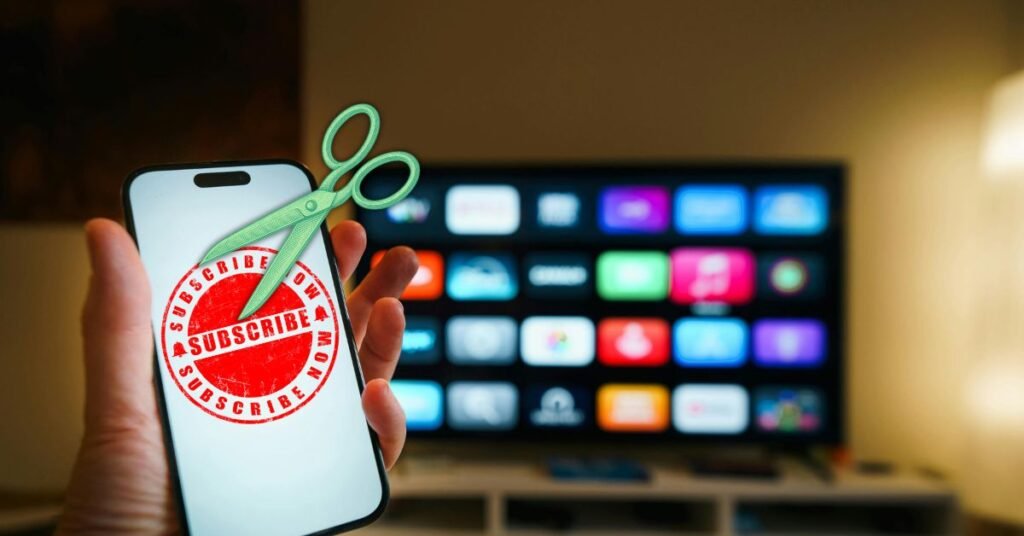
This is the most commonly cited item on any list of small monthly expenses, and it remains on every list because it remains genuinely, persistently common.
Subscriptions are designed to be easy to start and easy to forget. A free trial that converted automatically.
A streaming platform taken out during a specific series and never cancelled. A second or third music or entertainment subscription that overlaps almost entirely with one you already have. A monthly app charge for something you downloaded once and opened twice.
The fix is an audit, done once, and then repeated every few months.
Go through your bank statement or credit card and list every recurring payment leaving your account.
Not from memory of the actual statement, because memory is exactly where these hide.
Mark each one: actively using and worth the cost, occasionally using and worth reviewing, or not using at all.
Cancel the third category immediately. Review the second honestly. The first stays.
Many households find, the first time they do this exercise, at least two or three subscriptions they’d genuinely forgotten about. At $10 to $15 each, that’s a meaningful monthly sum being redirected to nothing.
A humble, yet very effective solution:
→ Clever Fox Budget Planner, Monthly Bill Tracker Book 5.8″x8.3″ Dark Green
Check current price on Amazon
As an Amazon Associate, Fox & Nook earns from qualifying purchases.
2. Frequent Food Delivery and Takeaway
Food delivery is one of the most expensive ways to eat, and also one of the most normalised.
The convenience is real after a long day; the friction of cooking versus tapping an app is significant.
However, the cost premium of regular delivery, when it becomes a default rather than an occasional choice, is one of the larger quiet drains on a monthly budget.
The cost isn’t just the food itself. Delivery fees, service charges, small order fees, and the tendency to spend more when browsing a menu from a sofa than when deciding what to cook all compound the base price considerably.
The slow living reframe here helps immensely when it comes to this monthly expense. It is not "never order food," it's "make it a deliberate choice rather than a default."
The difference between ordering delivery because you actively want a particular food, or because it’s a Friday evening treat, and ordering it because you haven’t planned anything and it’s the path of least resistance is the difference between intentional spending and automatic spending.
Meal planning, even at its simplest, a rough weekly idea of what you’ll eat, removes most of the moments where delivery becomes the default. It doesn’t eliminate the occasional deliberate choice to order in, which is fine. It eliminates the unplanned ones, which are the expensive ones.
3. Daily Convenience Drinks Away From Home
The daily coffee argument is well-worn enough that many people have stopped taking it seriously. It deserves a second look, not because a single coffee is expensive, but because the habit, at scale, demonstrates a principle worth understanding.

A coffee purchased daily at $4 to $6 is $120 to $180 per month, or over $1,400 per year.
This is not an argument to never buy coffee outside the home.
It’s an observation that a habit at this frequency and cost applied to coffee, or to any equivalent daily convenience purchase, is worth examining once rather than simply continuing by default.
Regarding what monthly expenses to cut..
The question is not "Should I give up takeaway coffee altogether?" But rather: "Do I actually value this as much as its annual cost?"
Some people genuinely do the ritual of a particular café, and the pause it represents in a working morning. That’s a considered choice.
Others, on reflection, find that the habit is more about convenience than genuine enjoyment, and that an equivalent made at home provides the same actual satisfaction at a fraction of the cost.
Our finds and recommendations to help you on the topic:
A coffee station organizer for your home:
→ ugiftt Coffee Station Organizer for Counter
Check current price on Amazon
An Italian Moka Espresso Maker:
→ Bialetti Moka Express Iconic Italian Stovetop Espresso Maker (Natural Silver, 6 Cups)
Check current price on Amazon
A reliable, quality coffee grinder:
→ BLACK+DECKER One Touch Coffee Grinder
Check current price on Amazon
4. Impulse Online Purchases
Online retail has become extraordinarily effective at converting a passing interest into a completed purchase.
Seamless checkout, one-click ordering, next-day delivery, and algorithmic recommendations designed to surface things you didn’t know you wanted until they appeared. The infrastructure around online shopping is built to reduce the time between impulse and purchase to near zero.
The result is a category of spending that most people underestimate significantly when they think about where their money goes.
The most effective intervention to cut this monthly expense is simple → Introduce friction.
● Remove saved payment details so that completing a purchase requires actively entering card information.
● Use a wishlist rather than a basket.
● Add things you want to buy, and return to the list after 48 hours. Most items will still be there, and most of the urgency to buy them will have evaporated.
This isn’t deprivation. It’s replacing an automatic behaviour with a deliberate one.
The things you genuinely want after 48 hours are worth buying. The things that no longer feel necessary are the impulse, and that’s what you’re eliminating.
5. Premium App Upgrades With Minimal Use
Most apps offer a free tier that covers the majority of what most users actually need and a premium tier that offers additional features marketed as essential, but most of the time their usage tends to be rather infrequent.
Productivity apps with premium plans. Cloud storage upgrades. Note-taking tools with “pro” versions.
Fitness or meditation apps with annual subscriptions. Each one is a reasonable cost in isolation. Together, across several apps, they add up to a monthly figure that rarely reflects their actual usage.
Your action to cut the monthly expense here →
The review process is the same as for subscriptions generally: look at each paid app tier honestly and ask when you last used the features the premium plan provides. For most people, a number of these will not survive the question.
The free tier almost always remains available the downgrade is rarely as significant as the upgrade felt at the time.
6. Groceries That Become Food Waste
This is the monthly expense that is most consistently underestimated, because it doesn’t announce itself. It disappears quietly into a bin at the end of the week.

Research consistently finds that the average household wastes a significant proportion of the groceries it purchases in both volume and financial cost.
● Produce bought with good intentions that wilted before being used.
● Ingredients purchased for a specific recipe and never touched again.
● Items were bought in bulk because the unit price was lower, without considering whether the volume would actually be consumed.
The practical fix to cut this monthly expense is unglamorous but effective: Meal Planning & List Shopping.
Making a decision in advance about what you’ll eat during the week, not elaborately, just roughly and buying specifically for that plan eliminates most of the categories of food waste. It also tends to reduce total grocery spend, because shopping with a list and with a purpose produces fewer additions than shopping without one.
A small, visible notepad in the kitchen for tracking what’s running low and what needs using up is one of the simplest tools for reducing food waste consistently.
The habit of checking what’s already in the fridge before planning the week’s meals sounds obvious, but is practised far less than it should be.
7. Convenience Fees & Other Small Service Add-Ons
These are the charges that sit below conscious attention: the $1.99 service fee on a ticket booking.
The small charge for next-day delivery on an order that didn’t need to arrive tomorrow. The card processing fee on a utility payment. The premium for using a particular payment method. The “priority” option was ticked without much thought.
As with the other small monthly budget costs, individually, these amounts feel negligible, and that’s precisely why they’re worth attention. Negligible individual costs, repeated across dozens of transactions each month, accumulate into a non-negligible total that produces nothing of value in return.
How to cut this monthly expense?
The habit change here is simply a pause at the point of checkout.

Before accepting any add-on fee, a single question: do I actually need the faster delivery, the priority booking, the card surcharge?
In most cases, the honest answer is no, and the standard option is entirely adequate.
The idea is not that you become deliberately difficult or spend excessive time on minor decisions. It’s about not accepting small charges on autopilot. The savings per transaction are small, yet the cumulative annual effect of consistently declining unnecessary add-ons is meaningful.
8. Trend-Led or Emotionally-Driven Clothing Purchases: A serious monthly expense to cut..
Clothing is one of the categories in which the gap between how much is spent and how much genuine, lasting value is received is widest, and one of the most culturally normalised forms of low-value spending.
Fast fashion has made it possible to buy a new item of clothing for the price of a coffee, which means the purchasing threshold is almost nonexistent.
The result, for most people, however, is a wardrobe containing a significant proportion of items worn once or twice and then relegated to the back, not because they were bad purchases at the time, but typically because they were bought in response to a trend, a mood, a sale, or a passing aesthetic interest rather than a genuine, lasting need.
To cut this monthly expense: The slow living approach to clothing is not a capsule wardrobe prescription.
It’s a shift in the question asked before buying: not “do I like this?” but “will I wear this regularly, in my actual life, for the next few years?” The second question is harder to answer enthusiastically about a trend piece. It’s easier to answer about a well-made, versatile basic.
Introducing the same 48-hour pause used for impulse purchases is particularly effective when it comes to clothing, where the excitement of a new item tends to diminish considerably once it’s been worn twice.
9. Duplicate Digital Storage and Cloud Plans
Most people with a smartphone, a laptop, and possibly a tablet are paying for more digital storage than they’re using, and in some cases, for multiple overlapping storage services simultaneously.
iCloud, Google Drive, and Dropbox, each upgraded to a paid tier, each solving the same problem slightly differently. It’s a category of expense that crept in during moments of genuine need, a device running out of storage, a file that needed to be shared and never got reviewed once the immediate problem was solved.

How to cut the monthly expense of overapping digital storage plans
The review here has two steps:
● First, audit what you’re actually paying for and how much of each is being used.
● Second, identify whether one service, properly managed, would meet your actual needs.
For most people, one well-organised cloud storage plan at a modest tier is sufficient. The others can be cancelled or returned to their free tier.
This also applies to digital tools more broadly, project management apps, note-taking platforms, and cloud backup services, where the proliferation of paid subscriptions has quietly become its own category of financial waste.
10. "Just In Case" Purchases
The final category is perhaps the most psychologically interesting: things bought not because there’s a current need but because there might be a future one.
● A spare of something you already own that works fine.
● An item purchased because it was on sale and might come in useful.
● A kitchen tool for a type of cooking you’re planning to start.
● A supply of something bought in bulk against an imagined eventuality that never arrives.
These purchases are driven by a logic that feels genuinely rational at the point of decision: it’s cheaper now, you might need it, it’s good to be prepared.
But it’s not unusual for these items to often sit unused; the anticipated need doesn’t materialise, and the money has left your account for something that lives in a cupboard.
How to cut the monthly expense of the 'Just in Case' items
The guiding question is: Do I have a specific, concrete use for this right now?
If the answer is “not exactly, but maybe,” that’s the signal to wait. The few cases where you do eventually need the item and have to buy it, then will cost less than the accumulated cost of all the preemptive purchases that were never used.
Where to Redirect the Money Instead
Cutting low-value expenses is only half of the equation.
The other half, and the part that makes this feel like a gain rather than a loss, is deciding in advance where that money goes instead.
Without a destination, freed-up money tends to get absorbed back into the same low-value patterns it came from. With a deliberate intention, it becomes something.
Some options to consider after you've cut your low-value monthly expenses:
● A small emergency fund, built consistently. Even a modest buffer of two or three months’ essential expenses can change the quality of your financial situation more than almost any other single factor.
It converts emergency costs into inconveniences and removes the low-level financial anxiety that makes it harder to think clearly about money in general.
● Debt reduction, above minimum payments. If you carry any high-interest debt, additional payments against the principal have an effective return that no savings account will match. Every extra payment reduces the total interest paid over the life of the debt and reduces the monthly weight of it sooner.
● A beginner investment habit, started small. Once an emergency fund is in place, even a modest, regular contribution to an investment account, however small, puts your money to work in a way that a standard current account never will. The principle isn’t complexity or risk; it’s consistency and time.
Money invested regularly over the years benefits from compounding in a way that makes starting early far more valuable than starting large. If you’re new to investing, the most important first step is simply opening an account and beginning the habit, which matters more than the amount.
● One genuinely valued experience or purchase per month. The slow living approach to spending isn’t frugality for its own sake; it’s redirecting money from things that don’t matter toward things that do. A meal out that you actually look forward to. A book you’ve been wanting to read. A class, a trip, a quality object that will last years. Intentional spending is not less spending, it’s better spending.
● A savings goal with a specific purpose. Money saved toward something concrete, a trip, a home improvement, or a period of reduced working, is more motivating and more resistant to being quietly eroded than a general savings balance with no particular destination.
Looking to start your investing journey?
🎁 Get a Free Fractional Share Worth Up to £100 [for our UK readers]
If you are new to investing or opening a new account, you can score a free fractional share worth anywhere between £8 and £100 when you sign up for a commission-free Trading 212 Invest, Stocks ISA, or SIPP account.
- Sign up via this Trading 212 Promo Link
- Complete your identity verification setup.
- Deposit the minimum required amount (usually just £1 depending on your region) within 10 days of creating your account.
- Your free fractional share will be randomly assigned and credited to your account within 3 business days! [1, 2]
Risk Warning: Investing carries risks; your capital is at risk and the value of investments can go down as well as up, meaning you may get back less than you invested. This content is for informational purposes only, does not constitute financial advice, and past performance is no guarantee of future results.
How to Spot and Cut Your Own Low-Value Monthly Expenses
The ten categories above are the most common culprits, but low-value spending is personal. As such, your version of it might not map exactly onto this list, and the categories that matter most to address are the ones specific to your actual spending patterns.
A simple process for identifying them:
Pull up last month’s bank or card statement. Go through every transaction, not just the obvious ones. For each recurring charge: is this actively adding value? For each non-recurring purchase: do I remember buying this, and would I buy it again today?
Identify your “leaking” categories, the ones where spending is frequent, habitual, and largely automatic. For many people, this is food, digital services, or small daily habits. For others, it’s clothing, home objects, or convenience spending. The category varies; the pattern of automatic rather than intentional spending is consistent.
Give yourself one month of tracking.
Not a full budget system, just a record of where money goes. Most people find that a month of honest tracking reveals one or two spending patterns they hadn’t previously seen clearly. Those are the categories worth addressing first.
This connects directly to the broader approach to budgeting on one income; the same principle of clarity before change applies regardless of your income level.

A Summary: The 10 Montly Expenses To Cut and the Habit Change for Each
Expense | The Simple Habit Change |
Audit all recurring charges; cancel what you don’t actively use | |
Meal plan to remove the moments where delivery is the default | |
Assess annual cost honestly; replace habit with intention | |
Introduce a 48-hour wait; remove saved payment details | |
Review each paid tier against actual usage | |
Meal plan, shop from a list, check the fridge before buying | |
Pause at checkout; decline add-ons you don’t genuinely need | |
Ask “will I wear this regularly for years?” before buying | |
Consolidate to one well-managed storage service | |
Buy for current, concrete needs — not anticipated maybes |
FAQs & Tips On What Monthly Expenses to Cut
How much money could I realistically save by addressing these expenses?
This amount can vary considerably by household and current spending patterns, but the most common finding when people do a genuine audit of these categories is a monthly saving of between $50 and $200, sometimes more, occasionally less. The subscription audit alone frequently reveals $30 to $50 in forgotten or duplicate charges. The food-related categories (delivery, food waste, convenience drinks) are often where the largest single savings are found. The cumulative annual figure, even at the conservative end, tends to be meaningfully larger than people expect when they consider each item individually.
Does cutting these expenses mean I have less fun or comfort?
In most cases, no, and this is the core point of the post. The expenses on this list are specifically those where the cost and the actual enjoyment or value received are most misaligned. Cancelling a streaming service you haven’t opened in two months doesn’t reduce your quality of life. Stopping the delivery order you placed because you hadn’t planned dinner, and replacing it with a meal at home doesn’t either. What you’re removing is automatic spending that isn’t actually producing much. The spending that genuinely matters to you, the things you’d miss, is not on this list.
How often should I review my monthly expenses?
A thorough review once every three months is a reasonable cadence for most households. Subscriptions and digital services are the category most likely to change between reviews, since new ones are easy to acquire and easy to forget. A lighter monthly check, a brief scan of recurring charges during a weekly reset, or at the end of the month can catch new additions before they establish themselves as forgotten habits.
What if my partner or household members spend differently from me?
Different spending habits within a shared household are one of the most common and most genuinely difficult financial challenges. The most productive approach is usually to start with your own spending, the categories you have direct control over, rather than beginning with a negotiation about shared expenses. Changes you make to your own habits tend to create visible results that open conversations more naturally than a direct challenge to someone else’s spending.
The Goal of What Monthly Expenses to Cut, Isn't Less.. It's Better.
None of the ten expenses in this guide is inherently wrong. Some of them, for some people, represent entirely reasonable and genuinely valued spending. The point is not to eliminate them categorically, it’s to examine them once, honestly, and decide whether they’re earning their place in your monthly budget or simply occupying it.
Intentional spending isn’t about having less. It’s about having more of what actually matters: more financial breathing room, more ability to say yes to the things you genuinely value, more clarity about where your money is going and why.
The ten categories in this guide are simply the most common places where that clarity tends to be missing. Address the ones that apply to your life.
Leave the ones that don’t. And use what you free up for something that actually moves you forward. ❤️
Thank you for reading our guide on the 10 Monthly Expenses to Cut!
We think you might also like to explore our other guides:

[…] Intentional spending is often discussed in terms of what not to buy, the subscriptions to cancel, the impulse purchases to avoid, and the habits that quietly drain a budget without adding much in return. That conversation is worth having, and we’ve had it elsewhere on Fox & Nook. […]
The focus on small, low-attention expenses accumulating quietly is useful because it avoids treating overspending as one dramatic problem. Calling out “just in case” purchases and emotional clothing buys gives a clear starting point for a more honest monthly review.
Thank you! That was exactly the idea behind the post. It’s often easier to spot one big unnecessary expense, while the smaller “just in case” purchases or emotional buys can quietly become part of our normal monthly spending. Taking a closer look at those patterns can make a monthly review much more useful and hopefully a little more manageable too. 🙂
[…] 10 Monthly Expenses To Cut & What to Do With the Money Instead […]