

Disclosure:
This article may contain affiliate links. If you choose to purchase through them, Fox & Nook may earn a small commission at no additional cost to you. We only reference products we believe align with intentional, functional living.
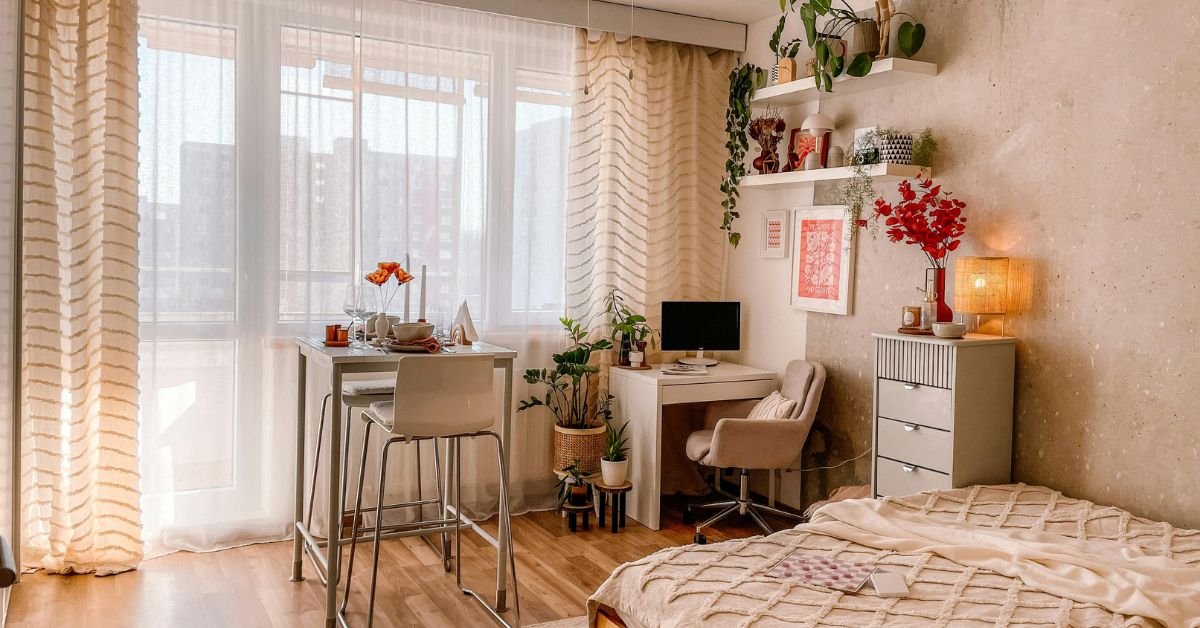
Small apartments are remarkably efficient.
That’s their superpower, really, the ability to pack so much life into so little square footage. Your dining table hosts dinner, then becomes a workspace by morning. The sofa welcomes guests, supports your posture through a workday, and catches you at the end of it. The bedroom wardrobe quietly absorbs everything that doesn’t fit elsewhere.
But here’s the thing about efficiency: it’s uncommon that it comes at the cost of intention.
When every surface serves multiple purposes, when every corner pulls double duty, something subtle happens. You subconsiously stop associating any one place with any one state of being. The table where you ate dinner is also where you answered emails. The spot where you watched a movie is also where you sat through back-to-back meetings. The boundary between doing and being begins to blur.
This is why creating a cozy reading nook in a small apartment matters more than it might first appear.
It’s not really about decoration. It’s not about achieving some aesthetic ideal you saw on Pinterest. It’s about something quieter and more essential: behavioral design.
A reading nook, even a tiny one, even just a corner of a room, creates a psychological boundary. It sends a clear, consistent signal to your brain:
Here. This is where we slow down.
Not the dining table. Not the sofa that’s also your office chair. Just this one small pocket of space, deliberately set apart.
In a home where every area has learned to multitask, that singular message matters. It tells your nervous system that rest isn’t something you have to earn or find time for, it’s something you’ve already made space for.
Let’s design a reading nook that truly works. One that fits your actual square footage, respects your actual budget, and most importantly, feels like somewhere you actually want to be.
Step 1: Find the Right Spot
(You Probably Already Have One)
When we dream about reading nooks, we tend to imagine something that requires space we don’t have. A bay window. A dedicated room. An empty corner just waiting to be transformed.
But here’s a small relief: you don’t need extra space. You need underused space.
Think about it. The spots that work best for a reading nook aren’t usually the ones you’re actively using for something else. They’re the in-between places. The margins of your home.
Start by simply walking through your apartment and noticing:
- Where does natural light fall softly during the day? Not harsh, midday sun but that gentler light, perhaps in the morning or late afternoon, that feels kind to eyes and skin.
- Which corner feels visually quiet? Not necessarily empty, but calm. A place where your gaze rests rather than darts.
- Where do you naturally pause? Maybe it’s by a window while waiting for coffee to brew. Maybe it’s a spot near the bookshelf where you find yourself lingering. These pauses are clues.
Where reading nooks often hide in plain sight:
- Near a window, even a small one, where light and a view create a natural appeal.
- Beside an existing bookshelf, even if that shelf currently holds other things.
- In a bedroom corner that’s currently just… there. Not serving any purpose, not causing any harm, just existing.
- At the end of a hallway, if you have the depth for a slim chair.
- Under a sloped ceiling in an attic apartment, those awkward spaces can feel unexpectedly cozy when claimed intentionally.
The guiding principle: work with your layout, not against it.
A reading nook doesn’t need to be carved out of your home with force. It needs to be noticed as a spot that’s already offering something, even if that something is just quiet.
What to do if your chosen spot feels undefined?
A little anchoring goes a long way. You don’t need walls or doors to create a sense of separation. Just subtle cues that tell your brain: this area is different.
- A compact area rug visually outlines the nook, creating a soft boundary on the floor. Even a small rug, 2×3 feet, just large enough for a chair, signals that this space has been claimed.
- A narrow vertical bookshelf adds structure without stealing floor space. It defines the nook’s edge while giving you storage at eye level.
- A floor lamp positioned thoughtfully creates a vertical anchor, drawing the eye upward and marking the nook as a distinct zone.
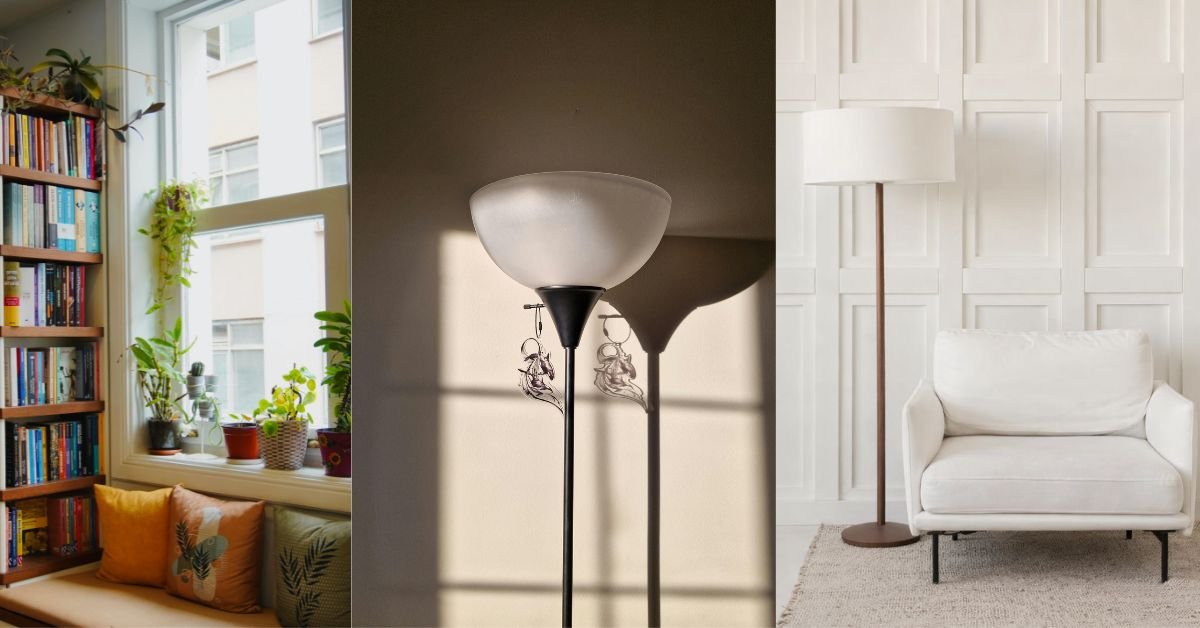
Why vertical thinking matters in small spaces?
Here’s something easy to overlook: in compact apartments, we tend to focus on what’s happening at ground level. Furniture placement. Floor space. Traffic patterns.
But eye-level and upward space? Often completely underutilized.
When you draw the eye upward with a tall, slender bookshelf, a pendant light, or even a piece of art hung slightly higher than expected, something shifts. The room feels taller. More ordered. Less like a collection of floor-bound objects and more like a considered space. Small apartments benefit enormously from this trick. It’s the difference between a room that feels cramped and one that feels intentional.
Your reading nook doesn’t need to be large. It just needs to be yours, just a small pocket of the home that you’ve looked at and said: ‘’here’’.
Step 2: Choose Seating That Invites You to Stay
Here’s a truth that’s easy to miss when you’re scrolling through inspiration photos: the seating you choose determines whether your reading nook becomes a habit or just another space merely driven by decoration.
A beautiful chair that isn’t comfortable? You’ll photograph it. You might even show it to friends. But you won’t use it regularly, not for long, not in the way you imagined. And in a small apartment, where every piece of furniture earns its keep through daily use, that really matters.
The proportion principle:
In compact spaces, size isn’t just about fitting through the door. It’s about how a piece relates to everything around it.
- A bulky recliner can overwhelm a small corner, making the whole room feel tighter.
- An ultra-minimal chair might look elegant, but leave you shifting uncomfortably after twenty pages.
The goal isn’t the smallest possible chair. It’s the right chair, one that supports your body without dominating your space.
What to look for:
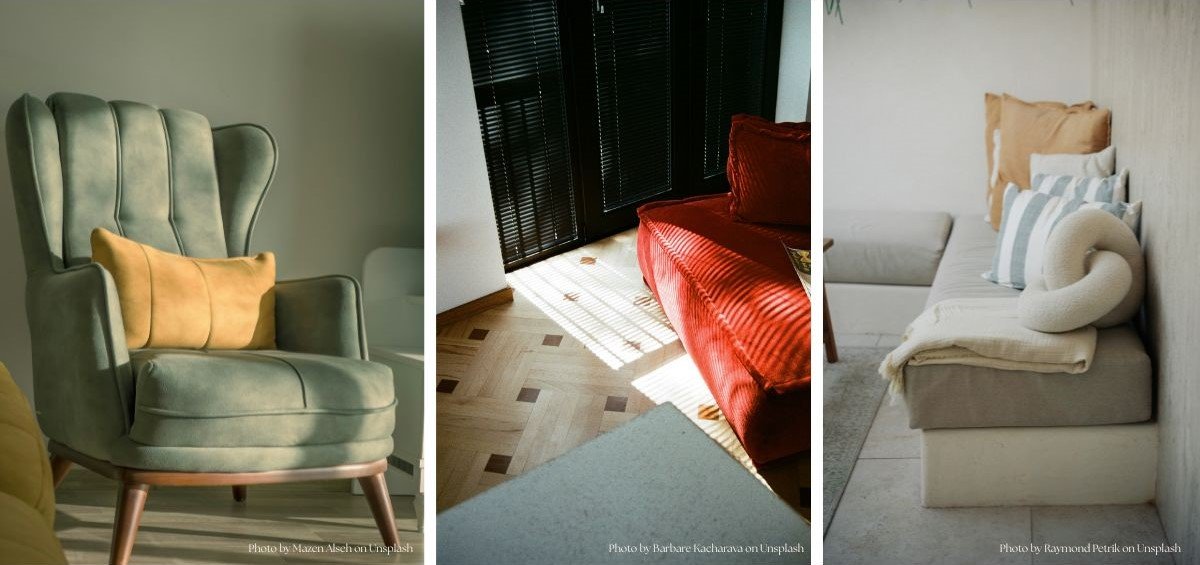
A compact upholstered accent chair with raised legs hits a sweet spot for many small apartments. Here’s why:
- Raised legs create visual openness. When you can see floor space beneath the chair, the room breathes. Your eye travels under and around it, rather than stopping at a solid block.
- Moderate seat depth (around 20–22 inches) encourages good posture. Too deep, and you’ll slouch or need to pile cushions behind you. Too shallow, and you’ll feel perched rather than settled.
- Structured backs provide support without requiring you to lean against a wall or stack pillows. They hold you gently in a position that works for reading.
If your space is extremely compact:
Don’t despair. A structured floor cushion can work beautifully when paired with a supportive wall. Look for one with firm density, something that holds its shape rather than collapsing beneath you. Add a back cushion if needed, and you’ve created a reading spot that uses zero floor space beyond its own footprint.
The key is this: posture should never feel compromised. Not even in the name of aesthetics. Not even in the smallest apartment.
Why this matters beyond comfort:
Here’s what the research shows: comfort isn’t just about physical ease. It’s about habit formation.
When your body experiences strain during an activity, even subtle strain, even strain you barely register, your brain takes note. It begins to associate that particular activity with discomfort. Not in a dramatic way. Just in a quiet, accumulating signal: this doesn’t feel good. Over time, that signal wins. You stop using the space. Not because you decided to. Because your body made that decision for you.
The right seating does the opposite. It sends a signal too.. one that says, this feels good! Stay a while. And that signal, repeated daily, is what turns a corner of your apartment into a cherished habit.
Choose the chair that invites you to linger. Your future self, lost in a book on a rainy afternoon, will thank you.
Step 3: Layer Light That Invites You to Settle In
Here’s something easy to overlook when you’re designing a reading nook: the light.
We tend to think about light in terms of visibility. Can I see the pages? Is it bright enough? And yes, those questions matter. But light does more than illuminate. It atmospheres. It tells your body whether to stay alert or begin settling down.
Ceiling lights are designed for the first thing: visibility. They flood a room with even, consistent brightness. That’s useful when you’re cleaning or searching for lost keys. But for reading? For easing into a book at the end of the day? Overhead light tends to work against what you’re trying to achieve.
The layered approach:
In a cozy reading nook, lighting should shift with the day.
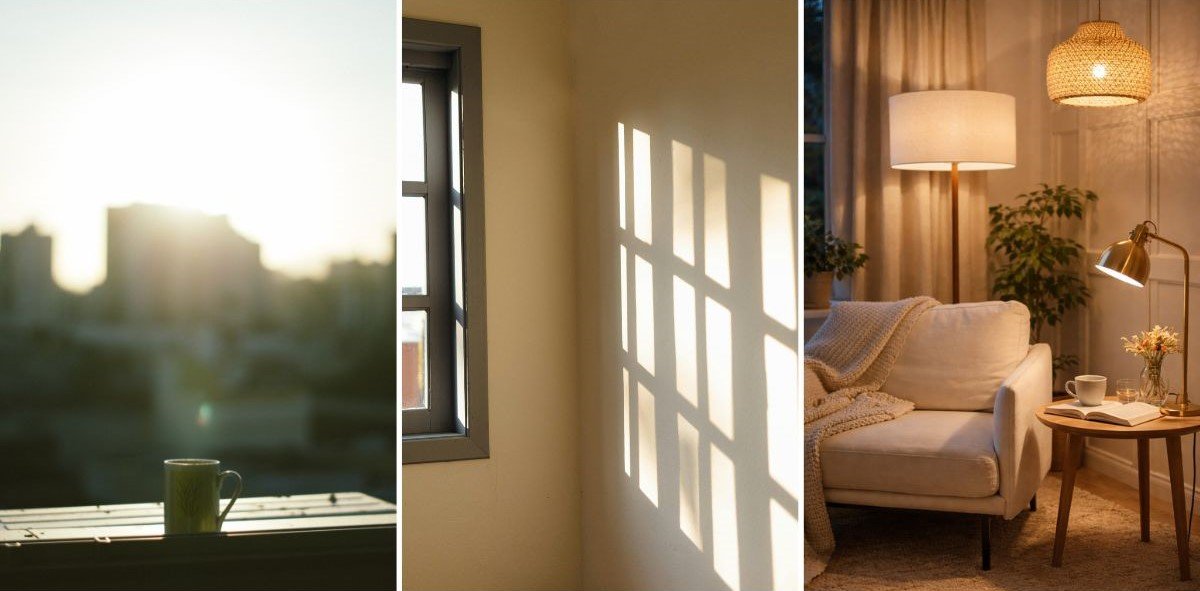
- During daylight hours, let natural light lead. Position your nook to catch whatever soft light your apartment offers, morning light on one side, afternoon glow on another. There’s no substitute for the real thing.
- As evening falls, bring in warm, purposeful light. A floor lamp positioned near your chair. An adjustable reading lamp that directs light exactly where you need it. Something you can control, rather than something that controls and overpowers the feeling of the whole room.
What to look for:
When choosing bulbs, pay attention to the number on the package. You’re looking for 2700K to 3000K warm white. This range mimics the golden tones of candlelight or sunset, not the blue-white glare of midday.
Research in environmental psychology confirms what you can probably feel already: warmer light encourages your nervous system to transition from alertness toward calm. It signals evening. Rest. It’s okay to slow down now.
A small positioning trick:
Place your lamp slightly behind or beside your shoulder, not directly overhead. This does two things:
- It reduces glare on the page, so your eyes don’t strain.
- It creates a pool of light that feels personal and contained—like the light is yours, not the room’s.
Why this matters for your reading habit:
Remember what we said about seating and habit formation? Light works the same way.
Harsh overhead light keeps your nervous system in a low-grade state of alert. It’s the equivalent of your brain receiving a quiet, steady message: still awake. still on. still processing.
Layered, warm light sends the opposite message. It tells your body: you’re done with the rest of the day. This pocket of time and space is yours.
And that message, repeated evening after evening, is what transforms a corner with a chair into a place you genuinely want to be.
Step 4: Let Texture Draw the Boundary Your Walls Can’t
Here’s a reality of small-space living: you probably can’t build a wall around your reading nook. You can’t install French doors or carve out an entirely separate room.
But here’s what you could do: you could create emotional separation through texture.
Think of it as a boundary your body feels rather than what your eyes see. A shift in sensation that tells you, without words, that you’ve moved from one kind of space into another.
How texture achieves this:
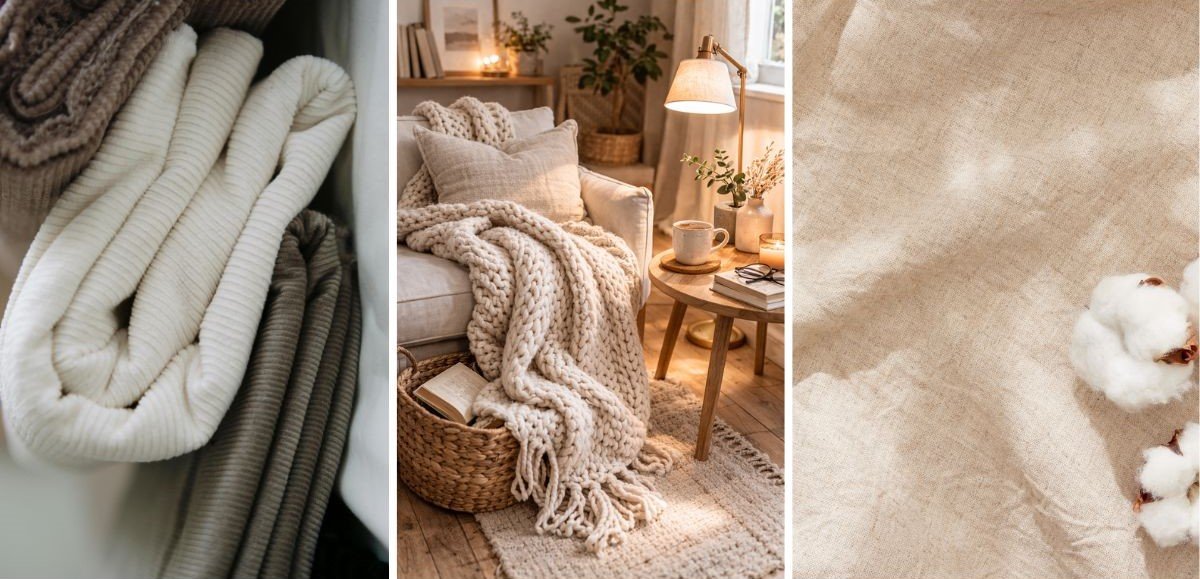
- A breathable throw blanket draped over the back or arm of your chair does more than add warmth. It signals rest. It’s an invitation to pull something soft around you, to settle in, to let the day’s edges soften.
- A small rug placed beneath your chair absorbs sound underfoot; that subtle dampening of noise makes a space feel quieter and more contained. It also marks the nook’s territory on the floor. Even without visible boundaries, your feet know they’ve arrived somewhere specific.
- A medium-support cushion at your back or beneath you adds comfort without bulk. It fills the small gaps where your body meets the chair, making the whole setup feel custom-made for how you actually sit.
Choosing materials that work year-round:
The goal is texture that invites rather than overwhelms especially in a compact space where heavy fabrics can visually shrink the room.
Look for materials that feel good against the skin in any season:
- Cotton: Breathable, washable, endlessly approachable. A cotton throw works in summer when you want just a light layer, and in winter when layered with something warmer.
- Linen blends: Slightly textured, naturally airy. Linen softens with use and never looks trying too hard.
- Soft knits: For when you want palpable coziness. A chunky knit throw draped nearby says curl up here more clearly than words ever could.
What to avoid:
Very heavy fabrics, such as thick velvet, dense wool, anything that adds visual weight, can make a small nook feel cramped rather than cozy. They absorb light and space in ways that work against the airy quality small spaces need.
Why this matters beyond aesthetics:
Texture works on a sensory level that’s older and more immediate than sight. Your skin knows before your eyes do whether a space feels welcoming.
When a nook is physically comforting, when the blanket is soft, the rug is warm underfoot, the cushion supports just so your body remembers. It begins to associate that corner with a feeling of ease. And that feeling is what pulls you back, evening after evening.
Not because you decided it should. Because your body wants to be there.
That’s the quiet power of texture. It doesn’t just decorate a space. It makes the space feel like yours.
Step 5: Store Books With Restraint (Even If It Hurts a Little)
Let’s address the elephant in the room. Or rather, the books in the nook..
When you imagine your perfect reading corner, what do you see? Probably books. Stacked on the floor. Piled on a side table. Spilling from a nearby shelf. It’s a romantic image, isn’t it? Being surrounded by all those stories, all those possibilities.
But here’s the thing about that image: it’s romantic, not practical.
In a small apartment, especially, too many books in your reading nook can work against what you’re actually trying to create. Instead of a calm retreat, you get visual noise. Instead of a place that invites settling in, you get a space that feels demanding, all those spines, all those unread pages, all that stuff.
A gentler approach:
Keep only what you’re actively reading in the nook itself.
That might mean:
- The book you’re currently lost in
- One or two you’ve queued up next
- Maybe a beloved favorite you return to again and again
Everything else? Give it a home elsewhere. The beauty of a small nook is that it asks you to be selective. And selectivity, practiced regularly, becomes its own kind of calm.
What works well in compact spaces:
- A slim side table with hidden storage is worth its weight in square footage. It gives you a surface for tea or coffee, tucks away 3–5 current books out of sight, and keeps the visual field clear. The books are there, you know where to find them, but they’re not competing for your attention while you read.
- A small wall-mounted shelf can work beautifully if you have the wall space. But here’s the key: restraint. One shelf. Two or three books. Maybe a small object that brings you joy. Not a library.
Why this matters beyond tidiness:
Remember what we’ve explored throughout this article about how our brains process space? Clutter increases cognitive load. Every object in your field of vision demands a tiny fraction of your attention, even the objects you love. Even the books you fully intend to read.
In a small home, that effect multiplies. There’s nowhere for visual noise to escape to. It just accumulates, quietly, until the space that was meant to restore you actually asks more of you than you have to give.
Your reading nook should be the exception. A place where the visual field is intentionally quiet, so your mind can be fully occupied by the page in front of you.
The deeper truth:
Keeping your book collection elsewhere isn’t a betrayal of your love for reading but rather an act of respect for your own attention. The books will still be there when you finish the current one. You’ll choose the next with intention, bring it to the nook, and begin again.
And in between? That small, quiet space holds just what you need.
Nothing more. Nothing less. That’s not deprivation. That’s designed for actual use.
Step 6: Make It Yours, But Just Enough..
This is the step where your reading nook stops being a collection of furniture and starts feeling like yours.
The book you’re reading. The light that hits just right. The seat that’s molded to how you sit. These are the bones. But the soul? That comes from the small things you choose to keep close. Here’s the thing about small spaces, though: a little goes a long way.
In a compact apartment, every object carries visual weight. Not physical weight, but visual weight. The eye registers everything. And when you’re trying to create a space for rest, that matters.
The principle: subtlety wins.
One well-chosen item speaks more clearly than a collection of near-misses. A single anchor point gives your eye somewhere to rest. A cluster of decorative objects? That’s just more processing.
What “just enough” might look like:
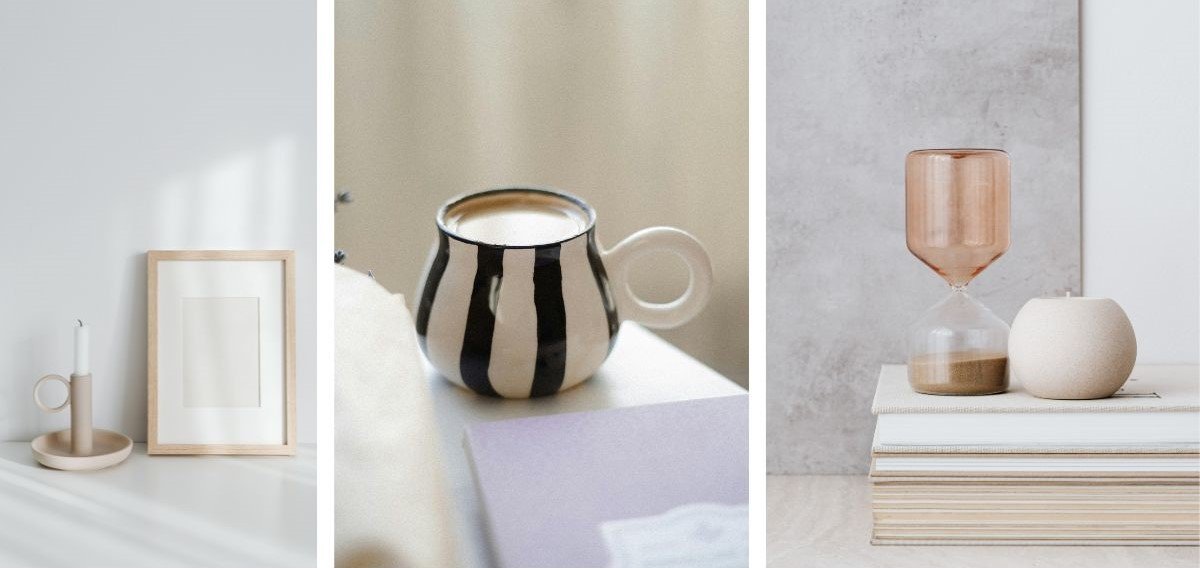
- One framed print that you genuinely love. Not because it matches your color scheme, but because something about it quiets or delights you. A landscape that reminds you of somewhere peaceful. An illustration that makes you smile. One is enough.
- One candle with a mild, natural scent if you’re someone who enjoys scent while reading. Not overwhelming. Not competing with the book. Just a quiet presence that signals this time is different.
- One ceramic mug reserved for reading evenings. It doesn’t need to say “Read” or have a literary quote. Just a mug that feels good in your hands, that you reach for when you settle into your chair. The ritual of using it becomes part of the experience.
That’s it. One of each, if you want them at all. Not a collection. Not a styling moment. Just a few small anchors that make the space feel claimed.
What to watch for:
It’s easy to cross the line from cozy to stimulating without noticing. A few more objects creep in. A second print. A small stack of decorative books. Another candle “just because.”
Suddenly, the space that was meant to quiet your mind is asking for its attention. Not in a demanding way, just in that subtle, cumulative way that visual clutter always does. Your reading nook doesn’t need to impress anyone. Not guests. Not Instagram. Not some imagined version of yourself who has a perfectly styled apartment.
It needs to support one thing: your habit of reading.
If an object doesn’t serve that, it doesn’t support your comfort, your focus, your feeling of ease; it probably doesn’t belong in the nook.
The deeper truth:
Personal anchors matter. They’re what transform a functional corner into a cherished space. But in a small apartment, they matter most when they’re chosen with restraint. One thing you love, placed with intention, speaks more loudly than a dozen things you simply like.
Let that be enough.
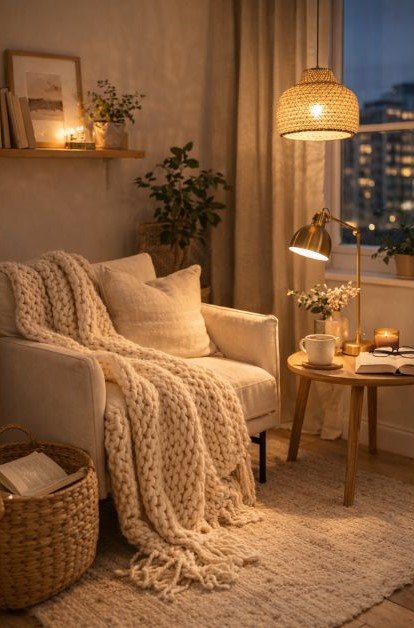
[…] How to Build a Cozy Reading Nook in a Small Apartment — a guide to creating space for rest […]