
Disclosure:
This article may contain affiliate links. If you choose to purchase through them, Fox & Nook may earn a small commission at no additional cost to you. We only reference products we believe align with intentional, functional living.
Small Kitchen Essentials Quick Overview
If you’re looking for quick, small kitchen inspiration, these are the storage ideas covered in this guide:
A good knife
A cutting board that stays put
A pan you reach for first
A colander that collapses (or hangs)
Measuring tools that don’t ”multiply”
Storage that works with your space
A tool for organizing other tools
Summary of suggestions
There’s a particular kind of frustration that only a small kitchen can deliver.
You want to cook something simple. A stir-fry, maybe. Or a proper breakfast. You gather your ingredients, and suddenly there’s no counter space left. You reach for your best knife, and it’s dull because it’s been rattling around in a drawer with everything else. You need your largest pot, but to reach it, you have to move the baking sheet, the mixing bowls, and that thing you’re not even sure what it’s for.
By the time you’ve wrestled everything into position, the desire to cook has quietly evaporated. Perhaps at that point, Takeout feels like self-care.
If this scene feels familiar, here’s the good news: you don’t need a bigger kitchen. You need better tools.
Not more tools. Not fancier tools. Just the right ones, chosen for how they function in a space where every inch earns its keep.
This isn’t about equipping you for elaborate dinner parties or ambitious weekend projects. It’s about making the daily act of feeding yourself and the people you love feel less like a negotiation and more like a quiet pleasure.
The Philosophy: Fewer, Better, Always Within Reach
Before we talk about specific tools, let’s name the principle that guides everything in this article.
In a small kitchen, every item has to justify its existence. Not by being beautiful (though that’s nice too). Not by being trendy (though that happens). But ideally, by being useful and accessible, without friction.
The best small-kitchen tools share three qualities:
- They earn their space through daily or near-daily use. The occasional-use item lives elsewhere, or maybe it doesn’t even live in your kitchen at all.
- They perform well enough that using them feels satisfying, not frustrating.
A dull knife, a wobbly cutting board, a pan with hotspots? These aren’t tools. They’re obstacles. - They store logically..nested, stacked, hung, or arranged so you’re not moving three things to reach one.
With that framework in mind, let’s look at the small kitchen essentials that actually deliver.
1. One Good Knife (Really, Just One)
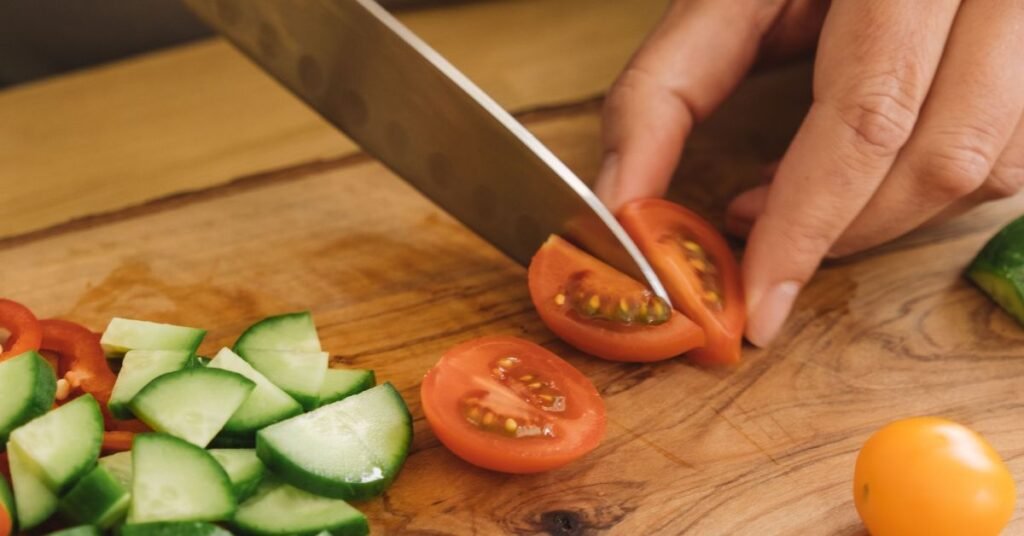
Walk into any kitchen supply store, and you’ll see blocks of knives. Twelve pieces. Fifteen. Twenty. Santoku, carving, bread, utility, boning, tomato — each with its own specific purpose.
Here’s a secret: you don’t need most of them.
In a small kitchen, a single high-quality chef’s knife, used well and kept sharp, handles 95 percent of what you’ll do. Chopping onions. Slicing vegetables. Mincing garlic. Even breaking down a chicken, if that’s your project.
What to look for:
- A blade length between 7 and 8 inches. Long enough to slice through a squash, short enough to feel nimble.
- A full tang (the metal extends through the handle) for balance and durability.
- Steel that holds its edge. High-carbon stainless is a reliable choice.
- A handle shape that fits your hand comfortably. If possible, hold it before you buy.
Where it lives:
Not in a drawer, rattling against other utensils. On a magnetic strip, if you have wall space. In a knife block, if it’s the only one. On a counter in a blade guard. Somewhere you can reach it without searching.
A chef’s knife like [Product Name] costs more than a set of twelve mediocre knives. That’s the point. You’re not buying twelve things. You’re buying one thing that will serve you for years, every single day.
2. A Cutting Board That Stays Put
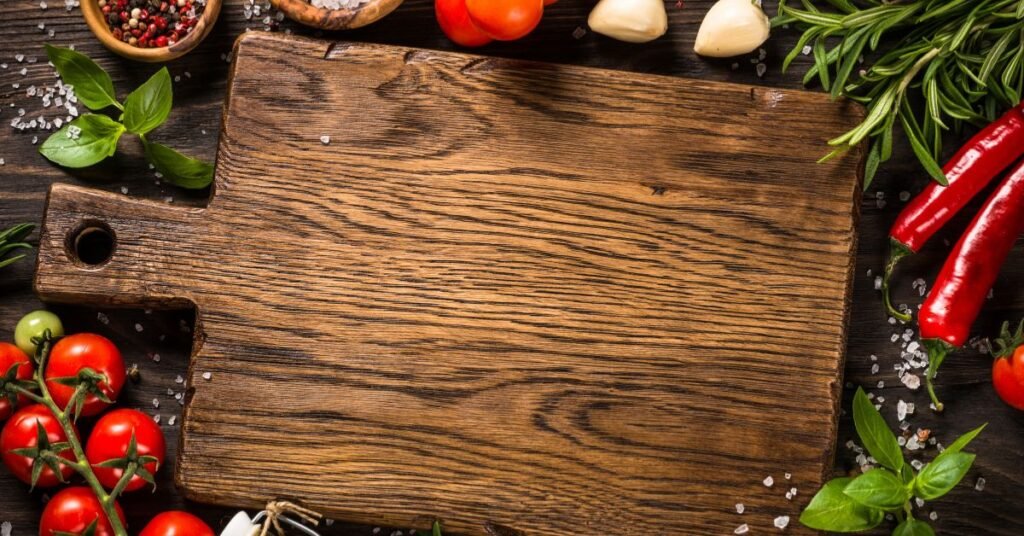
A good knife needs a good partner. The right cutting board does two things: it protects your blade (glass and stone boards will dull your knife quickly), and it stays where you put it.
Nothing slows down cooking like a board that slides across the counter with every chop.
What to look for:
- Wood or bamboo, which is gentle on knives and naturally antimicrobial.
- A size that fits your counter while giving you room to work. Too small, and the ingredients end up on the floor. Too large, and you’ve lost precious real estate.
- Non-slip feet or a slightly textured bottom, or a damp paper towel underneath if yours slides.
A small upgrade:
Consider two boards if you cook meat and vegetables. Color-coding (for instance, one light wood, one dark) makes it easy to remember which is which.
3. A Pan You Reach for First
You can own multiple pans. But in a small kitchen, one or two will do 80 percent of the work. The trick is choosing the right ones.
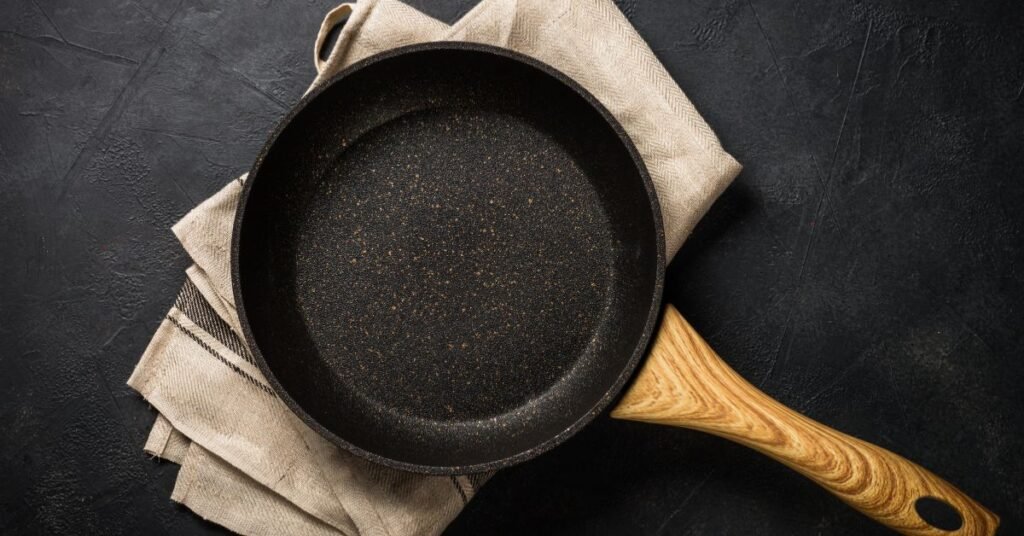
The workhorse: a 10- to 12-inch stainless steel or cast iron skillet.
- Stainless steel gives you control. It heats evenly, develops fond for pan sauces, and transitions from stovetop to oven.
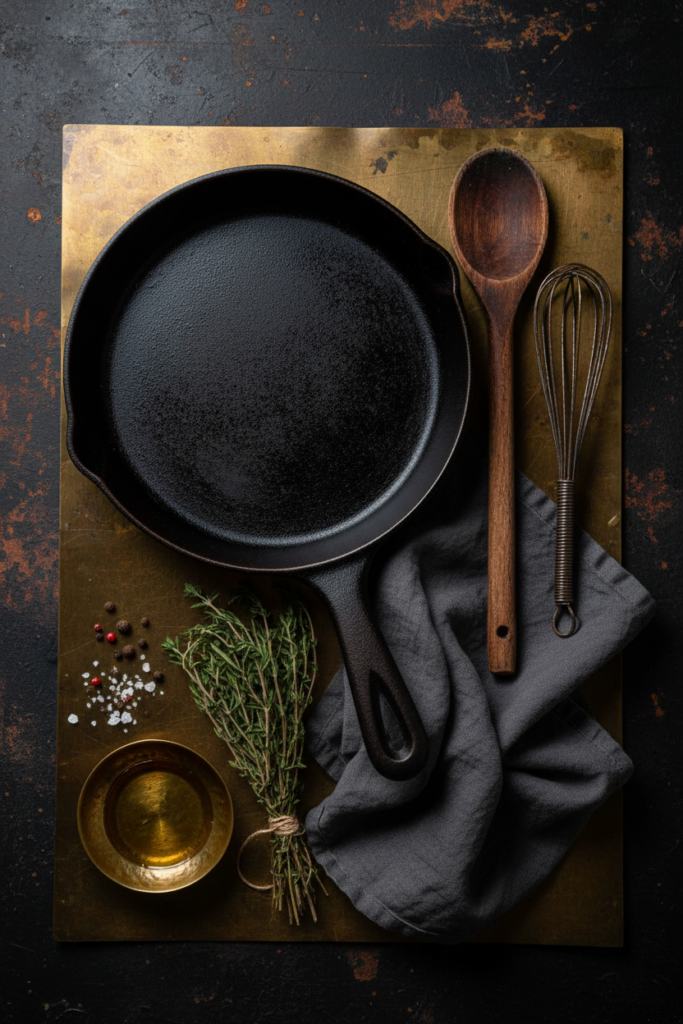
- Cast iron holds heat beautifully and doubles as a serving vessel. Yes, it’s heavy. Yes, it requires occasional seasoning. But many cooks find the trade-off worth it.
The secondary pan: a small non-stick for eggs and delicate fish.
If you cook eggs regularly, a small non-stick pan is worth the space. But buy the best you can afford, and replace it when the coating wears — non-stick is essentially temporary.
What they share:
Both should have oven-safe handles and lids if possible. Both should feel comfortable in your hand. Both should earn their place by being the pans you reach for, not the ones you dig past.
4. A Colander That Collapses (or Hangs)
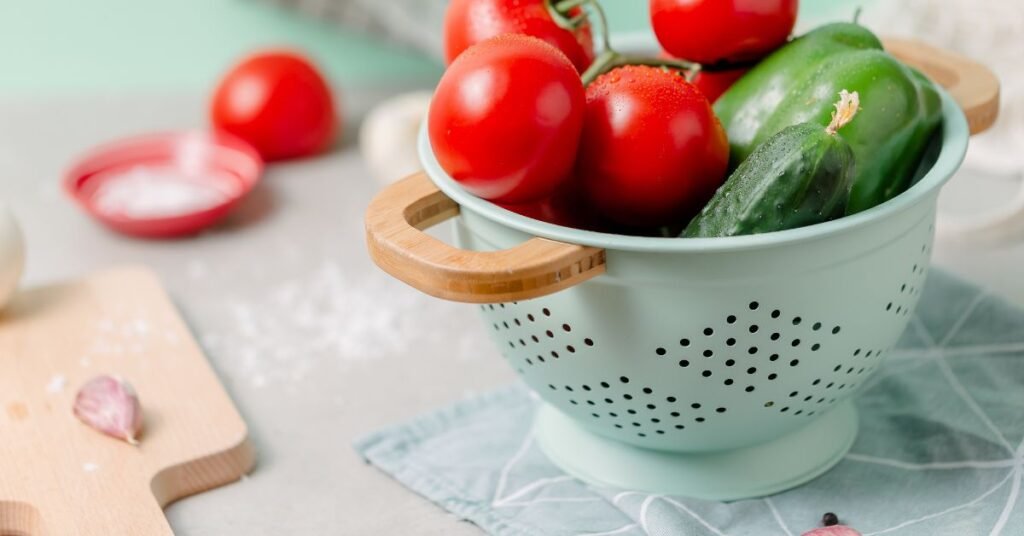
Colanders are bulky by nature. They’re full of holes, which means they don’t nest. They take up disproportionate space in the cabinet under your sink.
But you need one. You need to drain pasta, rinse beans, wash berries.
The small-kitchen solution:
- A collapsible silicone colander that folds flat for storage.
- Or a colander that hangs on a hook inside a cabinet door.
- Or a simple mesh strainer that does the job with less bulk.
The goal is the function without the permanent footprint.
5. Measuring Tools That Don’t Multiply
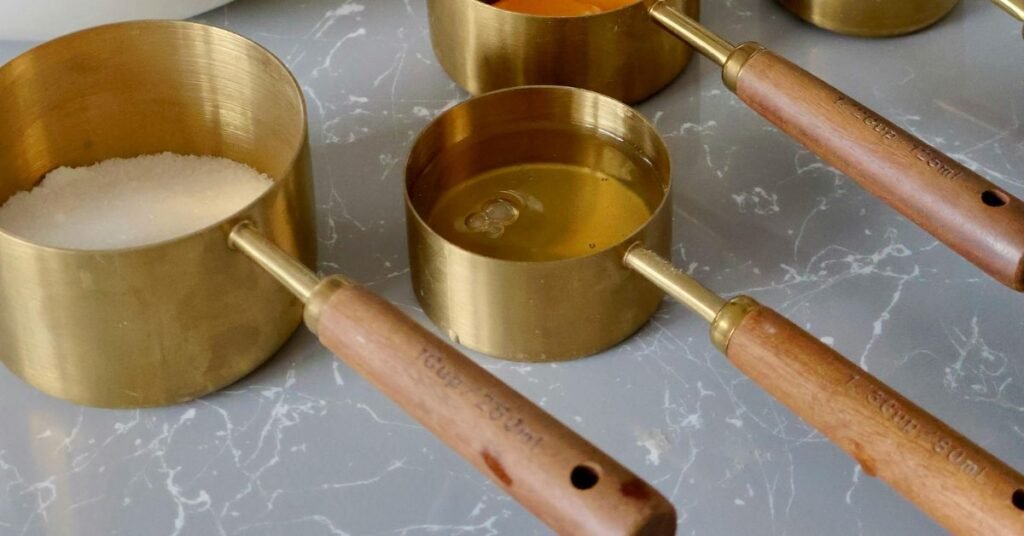
Measuring cups and spoons are notorious for multiplying. You buy one set, then another, then a set of adjustable ones, and suddenly your drawer is full of metal circles connected by rings that always seem to separate.
A simpler approach:
- One set of nesting measuring cups (dry ingredients).
- One 2-cup liquid measuring cup with clear markings.
- One set of measuring spoons that stay together (magnetic ones are excellent for this).
That’s it. You don’t need adjustable measures or digital scales (unless you bake, in which case a scale is genuinely useful). You just need tools that measure accurately and store compactly.
6. Storage That Works With Your Space
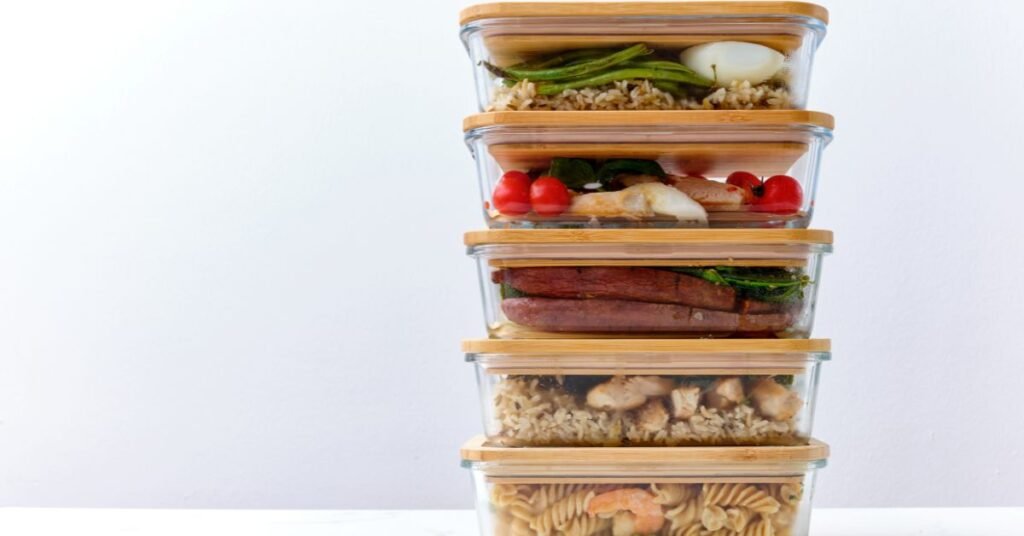
Food storage is the great challenge of small-kitchen living. Containers multiply. Lids go missing. The cabinet becomes a tower of plastic waiting to topple.
A more intentional system:
- Choose one material. Glass lasts longer and doesn’t stain. A good set of nests or stacks efficiently.
- Keep only as many containers as you actually use. If you haven’t reached for that odd size in six months, let it go.
- Store lids separately, upright in a small bin or file organizer. This alone transforms the experience.
For dry goods:
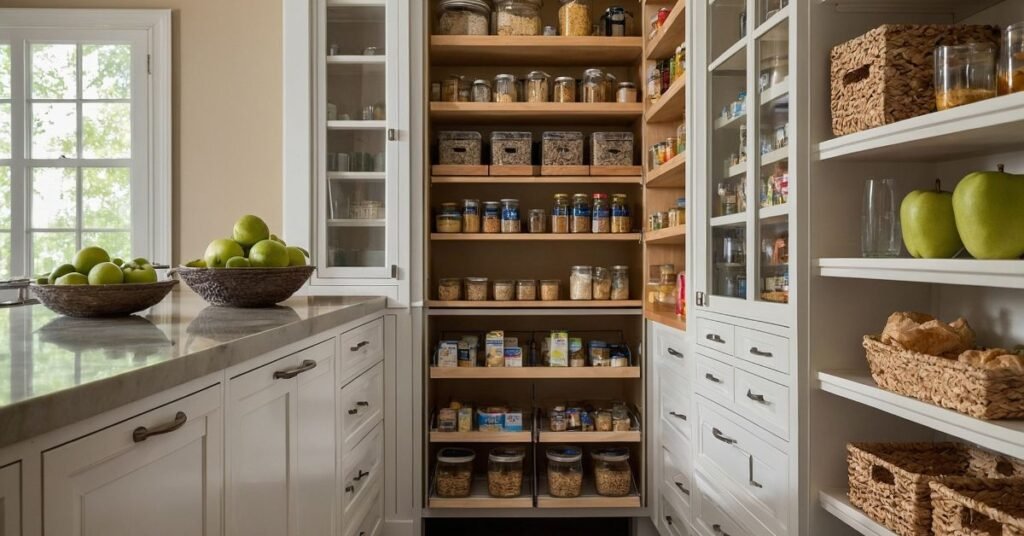
Clear, airtight containers for flour, sugar, rice, and pasta. Not a full pantry’s worth — just what you buy regularly. Square or rectangular shapes use space more efficiently than round ones.
7. A Tool for the Tools (Organization That Works)
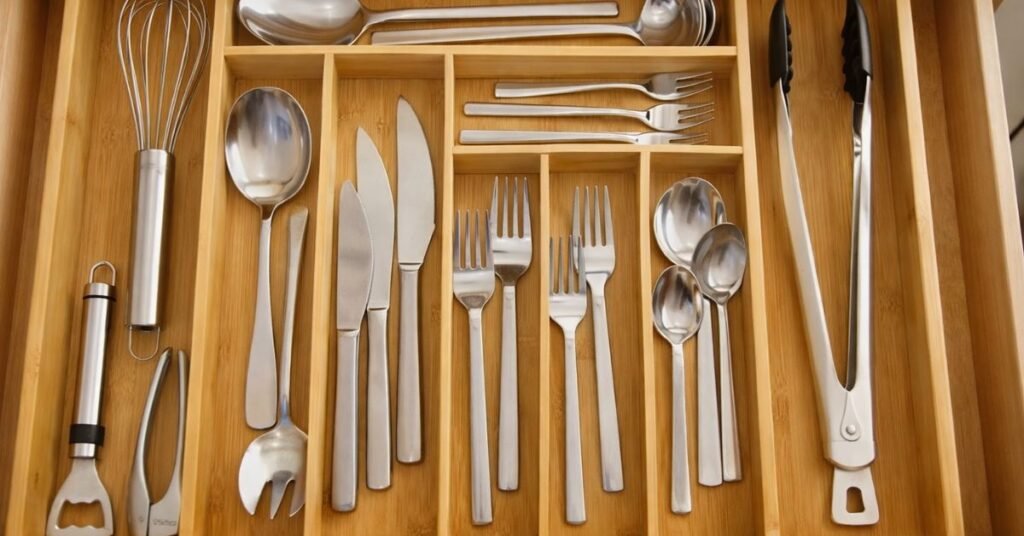
All these small kitchen essentials need a home because in a small kitchen, how you store them matters as much as what you own.
Wall space is prime real estate.
A magnetic knife strip frees drawer space. A rail with hooks holds utensils, pots, or towels. Open shelving (used with restraint) keeps daily items within reach.
Drawer dividers are worth the effort.
A drawer full of loose utensils is a drawer where nothing can be found. Simple bamboo dividers create homes for each tool. You open the drawer, you see everything, and you reach for what you need.
The principle:
Every item should have a designated place. Not because you’re tidy, but because when everything has a home, you stop spending mental energy searching.
A bamboo drawer organizer turns chaos into order in about five minutes. You measure your drawer, arrange the dividers, and suddenly your spatula is always where you expect it. That small predictability, multiple times a day, adds up.
What You Actually Need:
A Summary
If you’re starting fresh or paring down, here’s a complete list of small-kitchen essentials:
Category | Item | Why It Earns Its Space |
Knives | One good chef’s knife | Handles 95% of cutting tasks |
Prep | Wood or bamboo cutting board | Protects the knife, stays put |
Cookware | 10-12″ stainless or cast iron skillet | Versatile, daily use |
Cookware | Small non-stick pan (optional) | Eggs and delicate fish |
Draining | Collapsible colander or mesh strainer | Function without bulk |
Measuring | Nesting cups, liquid cup, magnetic spoons | Complete without redundancy |
Storage | Glass containers, one material | Stackable, visible, lasting |
Dry goods | Airtight containers for staples | Preserves freshness, visible |
Organization | Wall rails, drawer dividers | Every item has a home |
The Deeper Truth About Small Kitchens
Here’s something easy to forget when you’re frustrated with your kitchen’s limitations: Small isn’t the problem. Clutter is.
Not visual clutter, necessarily. Functional clutter. Tools that don’t work well. Duplicates that seemed like a good idea. Gadgets that do one thing, and that one thing isn’t something you actually do.
When you clear all of that away, when you’re left with only what serves you, daily, well, something shifts. The kitchen stops being something you work around and starts being something that works for you.
You still have limited counter space. You still can’t have twelve people over for a dinner party. But the daily act of feeding yourself? That becomes easier. Quieter. More like a small pleasure than a daily negotiation.
And in a world that asks so much of your attention, a kitchen that asks less is a genuine gift.
Our Gentle Reminder
You don’t need everything in this article at once, nor do you need to replace your current tools if they’re serving you well.
But if you’ve been frustrated by a dull knife, a wobbly board, a drawer full of lids that don’t match, consider starting with just one upgrade. The knife you use every day. The pan that would change how you cook eggs. The storage containers that would finally bring order to the chaos.
One small change, made intentionally, can shift how your entire kitchen feels.
And that feeling, multiplied across days and meals and years, is what turns a room where you cook into a space where you actually want to be.
A small kitchen that works better makes daily cooking feel like less of a negotiation.
For more small shifts that reduce friction throughout your home, visit Minimalist Home Upgrades That Instantly Improve Daily Life.